

冬季PF学术资料包已经发布多时
还没下载研读的同学
点击此处即可获取资料包哦!
在大家忙着备赛的同时
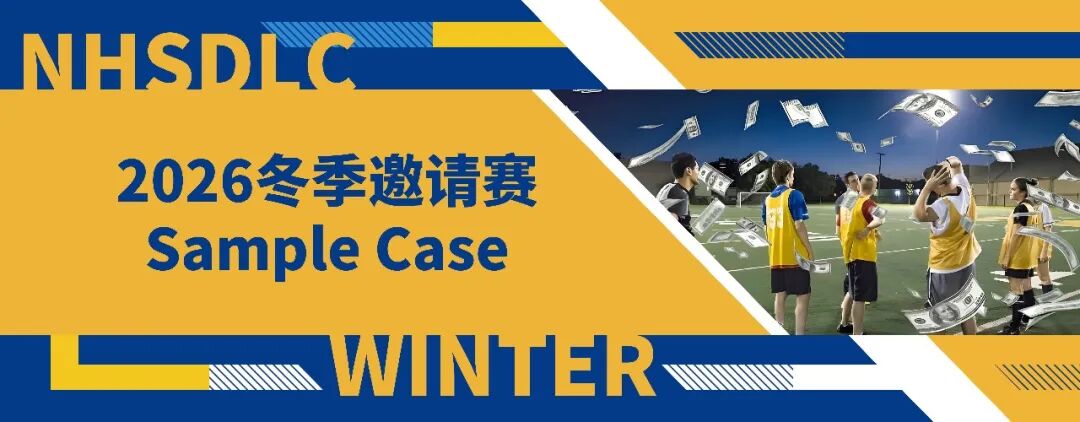
Sample Case也已经新鲜出炉啦
本次辩题正反双方可以从哪些角度入手拆解呢?
让我们赶紧来看看吧!
Sample Case
PRO
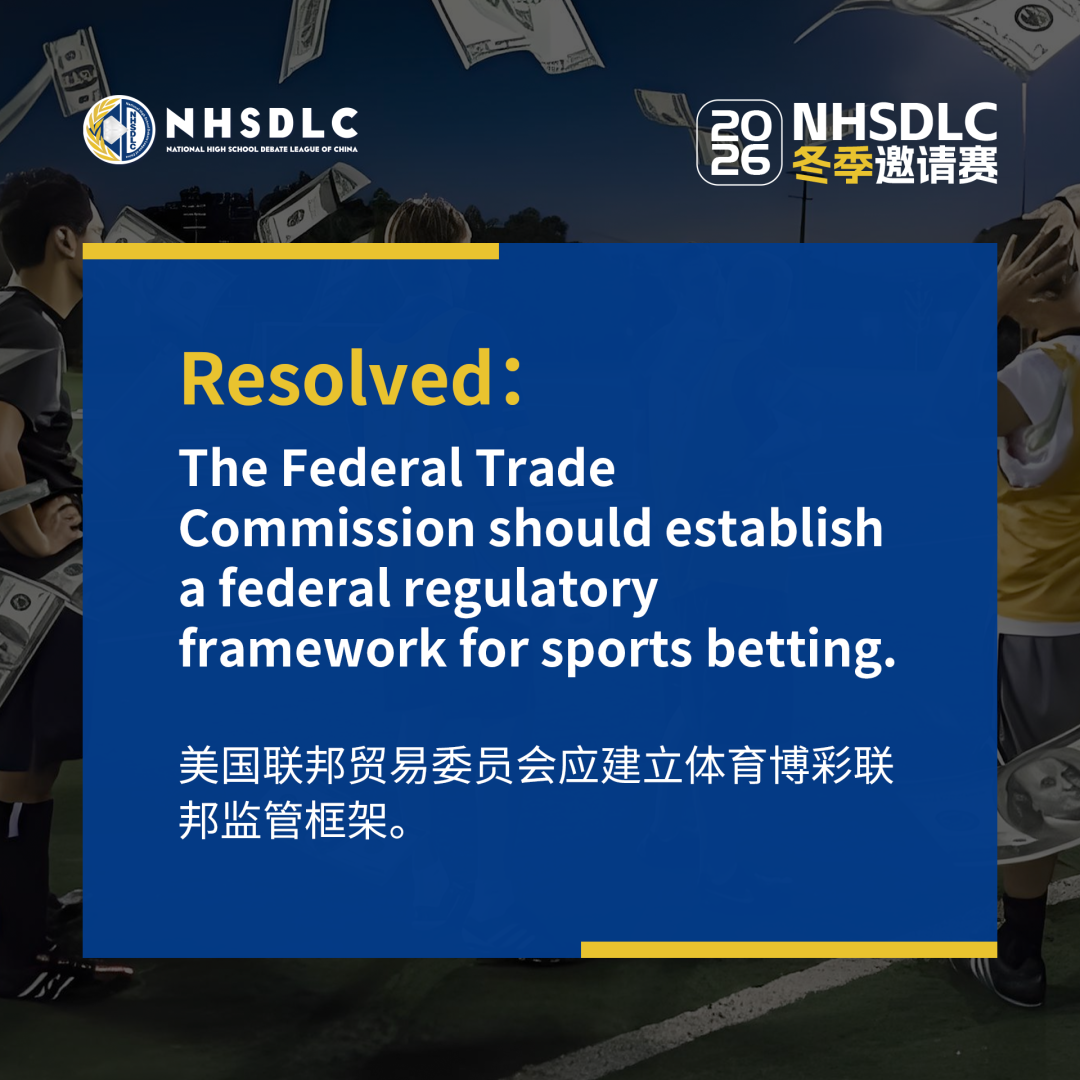
We affirm the resolution that the Federal Trade Commission should establish a federal regulatory framework for sports betting.
"Federal regulatory framework" refers to a set of national guidelines and enforcement mechanisms that set minimum standards for sports betting, allowing states to build upon them without preempting all local laws—similar to frameworks in online privacy or antitrust. And "Sports betting" means wagering on the outcome of sporting events, including in-person, online, and mobile platforms, as defined by the American Gaming Association (AGA).
Contention 1 -Consumer Protection
The current state-by-state system leaves bettors vulnerable to exploitation, but a federal FTC framework would establish uniform safeguards against fraud, addiction, and deceptive advertising.
Subpoint A:Fraud and Data Privacy. With 38 states plus D.C. legalizing betting as of 2026, inconsistencies in oversight have led to rampant issues—such as unlicensed operators and data breaches. A 2025 FTC report on consumer complaints highlighted a 25% spike in overall reported fraud losses to $12.5 billion in 2024, with gambling-related complaints contributing significantly amid the rise in online platforms. By empowering the FTC—experts in antitrust and privacy—the framework could mandate nationwide standards for age verification, secure payments, and transparent odds, reducing interstate scams. For example, the FTC's existing authority under Section 5 of the FTC Act has successfully regulated deceptive practices in other industries, like e-commerce, preventing billions in losses.
Subpoint B:Addressing Addiction. State variations in responsible gambling measures exacerbate problem gambling, affecting 1-2% of Americans with severe disorders (per the National Council on Problem Gambling), plus an additional 8% (about 20 million adults) showing at least one indicator of problematic behavior. A federal approach could require universal tools like deposit limits and self-exclusion registries, modeled after effective international systems. Evidence from a 2025 NCPG survey shows that unified safeguards could stem rising risks, particularly among young adults targeted by apps. The FTC, with its focus on unfair practices, is ideally suited to enforce these without overstepping, as it already oversees advertising to vulnerable groups.
Contention 2 -Economic Uniformity and Sports Integrity
Fragmented regulations hinder industry growth and invite corruption, but FTC oversight would foster a fair, revenue-generating market while safeguarding sports.
Subpoint A:Economic Benefits. Sports betting generated $15.91 billion in state tax revenue in 2024 alone (AGA data), but interstate barriers—like differing tax rates (51% in New York vs. 6.75% in Nevada)—stifle competition and innovation. A federal framework could standardize taxation and licensing, boosting GDP by an estimated $12.4 billion annually from 2019-2024 operations, according to a 2025 Progressive Policy Institute report (building on earlier Oxford Economics projections). This mirrors the success of federal alcohol regulations post-Prohibition, which stabilized markets. The FTC's antitrust expertise would prevent monopolies by big operators like DraftKings, ensuring small businesses thrive.
Subpoint B:Preserving Sports Integrity. Without federal coordination, match-fixing risks rise, as seen in 2025 scandals like the federal indictment of NBA players and coaches in illegal betting schemes. The International Betting Integrity Association (IBIA) reports 63 suspicious alerts in Q1 2025 alone, often involving cross-state bets. An FTC-led framework could integrate with leagues like the NFL for real-time monitoring, similar to the Wire Act's remnants. The 2025 SAFE Bet Act (H.R. 2087) endorses this, noting that federal rules enhance integrity in legal markets, as supported by NCAA efforts to ban prop bets amid scandals. This balanced approach promotes industry growth with protections for athletes and fans, addressing concerns from all sides.
For the all the reasons above, we urge a Pro Ballot.
Reference:
- Sports Betting States: Latest US Legislation & Bill Tracker, fromhttps://www.legalsportsreport.com/sports-betting-states/
- New FTC Data Show a Big Jump in Reported Losses to Fraud to $12.5 Billion in 2024, fromhttps://www.ftc.gov/news-events/news/press-releases/2025/03/new-ftc-data-show-big-jump-reported-losses-fraud-125-billion-2024
- National Council on Problem Gambling Survey Shows Drop in Problem Gambling Risk, Highlights Ongoing Challenges, fromhttps://www.ncpgambling.org/news/national-council-on-problem-gambling-survey-shows-drop-in-problem-gambling-risk-highlights-ongoing-challenges/
- State of the States 2025, fromhttps://www.americangaming.org/resources/state-of-the-states-2025/
- Online Sports Betting Taxes by State, 2025, fromhttps://taxfoundation.org/data/all/state/online-sports-betting-taxes/
- The Socioeconomic Impact of Legalized Sports Betting, fromhttps://progressivepolicy.org/publication/the-socioeconomic-impact-of-legalized-sports-betting/
- https://ibia.bet/media/documents/IBIA_Q3_Report.pdf
- The NBA players, coaches and gamblers at the center of a federal betting investigation, fromhttps://www.nytimes.com/athletic/6788069/2025/11/25/nba-players-coaches-gamblers-betting-investigation/
- H.R.2087 - SAFE Bet Act of 2025, fromhttps://www.congress.gov/bill/119th-congress/house-bill/2087/text
- DI schools rescind betting rules change; Ban on pro sports betting remains in place, fromhttps://www.ncaa.org/news/2025/11/21/media-center-di-schools-rescind-betting-rules-change-ban-on-pro-sports-betting-remains-in-place.aspx
Sample Case
CON

We negate the resolution thatthe Federal Trade Commission should establish a federal regulatory framework for sports betting.
Our framework in this debate is net benefits; prioritizing the policy that most reduces real-world harm. That means (1) shrinking illegal/offshore betting, and (2) implementing protections that are enforceable quickly and (3) sustain the growth of the industry. If we can prove the FTC fails this standard, we win the debate.
Contention 1 -Violation of State Sovereignty
The federal model comes with constitutional overreach. In the historic case of Murphy v. NCAA in 2018, the Supreme Court struck down the provisions within the Professional and Amateur Sports Protection Act (PASPA). Justice Alito writing for the court further stated that the ruling to firmly place regulations within the control of the states leads to "greater political accountability" and prevents Congress from evading responsibility for the finical consequences of its decisions.
An FTC-led framework would likely involve a “mechanism in which states cannot unilaterally pass laws” requiring them to submit their legislation for federal approval. According to the Supreme Court’s majority opinion in Murphy v. NCAA, Justice Samuel Alito clarified that the federal government cannot treat states as 'administrative arms' to carry out federal policy. Legal experts at the Tenth Amendment Center argue that an FTC framework would do exactly that, unconstitutionally “commandeering” state regulatory bodies to enforce federal mandates.
Impact:This overreach violates the 10th amendment and in effect replaces faster, localized regulations with 'one-size-fits-all' regulation. The states 'are closer to the fraud' and have a mechanism to individually tailor licenses to prevent fraud and corruption at levels a distant federal agency simply cannot match.
Contention 2 -FTC hurts the industry
Federal government regulation often brings increased financial costs that may impact the existence of the sports betting market. Specifically, federal sports betting taxes will add to the high taxes imposed by the states. Currently, taxes imposed by the states range between 6.75% to 51% of Gross Gaming Revenue (GGR), a federal tax will significantly add to the burden.
Historical data shows how crippling federal taxes can be, when a 10% federal excise tax was imposed on sportsbooks in the state of Nevada. Most by business opted to shut down or “stay away” from the industry because it was impossible to turn a profit. For example, on the 2018 Super Bowl alone, sportsbooks in Nevada had $1.17 million in profit; If a 10% federal tax would have been imposed on the total handle of $158.6 million, they would have lost in excess of $14 million.
Impact:Over-regulation in the form of the FTC would negatively affect an industry that has the potential to contribute in excess of $14.2 billion to the GDP and an additional 152,000 jobs according to Oxford Economics.
Contention 3 -Illegal Markets
Too restrictive federal mandates such as those in the proposed, “SAFE Bet Act” which include ad blackouts between 8 AM and 10 PM, risk alienating consumers. Industry expert Brendan Bussman, who believes these “unconstitutional” measures will “backfire” by “inflating the illegal market and pushing gamblers to offshore sites.”
Illegal, unregulated markets already pose a massive threat, with reports by the American Gaming Association (AGA) that "the U.S. loses Over $13 Billion tax revenue annually to these illegal operators.
Impact:Federal Over-regulation causes legitimate, taxed, and regulated markets to be less competitive with off-shore sports books who have better odds and no restrictions. In short, the FTC would remove the very consumer protections it seeks to offer by pushing consumers to the black market where they are vulnerable to being ripped off with zero legal recourse.
Therefore, for the sake of the 10th amendment, the growth of the industry and the protection of the people within the industry we are proud to negate.
Reference:
- https://files01.core.ac.uk/download/pdf/215374288.pdf
- DI schools rescind betting rules change; Ban on pro sports betting remains in place, fromhttps://sportshandle.com/impact-1-tax-sports-betting-i-nelson-rose/
- https://www.gaming.nv.gov/siteassets/content/about/press-release/NGCB_Press_Release_-_2025_Super_Bowl_Wagering.pdf
- https://www.americangaming.org/wp-content/uploads/2018/12/AGA-Oxford-Sports-Betting-Economic-Impact-Report1-1.pdf
- New AGA Report Shows Americans Gamble More Than Half a Trillion Dollars Illegally Each Year, fromhttps://www.americangaming.org/new-aga-report-shows-americans-gamble-more-than-half-a-trillion-dollars-illegally-each-year/
- https://www.supremecourt.gov/opinions/17pdf/16-476_dbfi.pdf
- The Professional and Amateur Sports Protection Act: How Its Invalidation Will Impact Indian Gaming's Legal and Regulatory Framework, fromhttps://scholars.law.unlv.edu/glj/vol9/iss1/5/
- Legalizing sports betting is the right call, fromhttps://reason.org/commentary/legalizing-sports-betting-is-the-right-call/
- Legalized Sports Betting: The Best Defense Against Corruption, fromhttps://reason.org/commentary/legalized-sports-betting-the-best-defense-against-corruption/
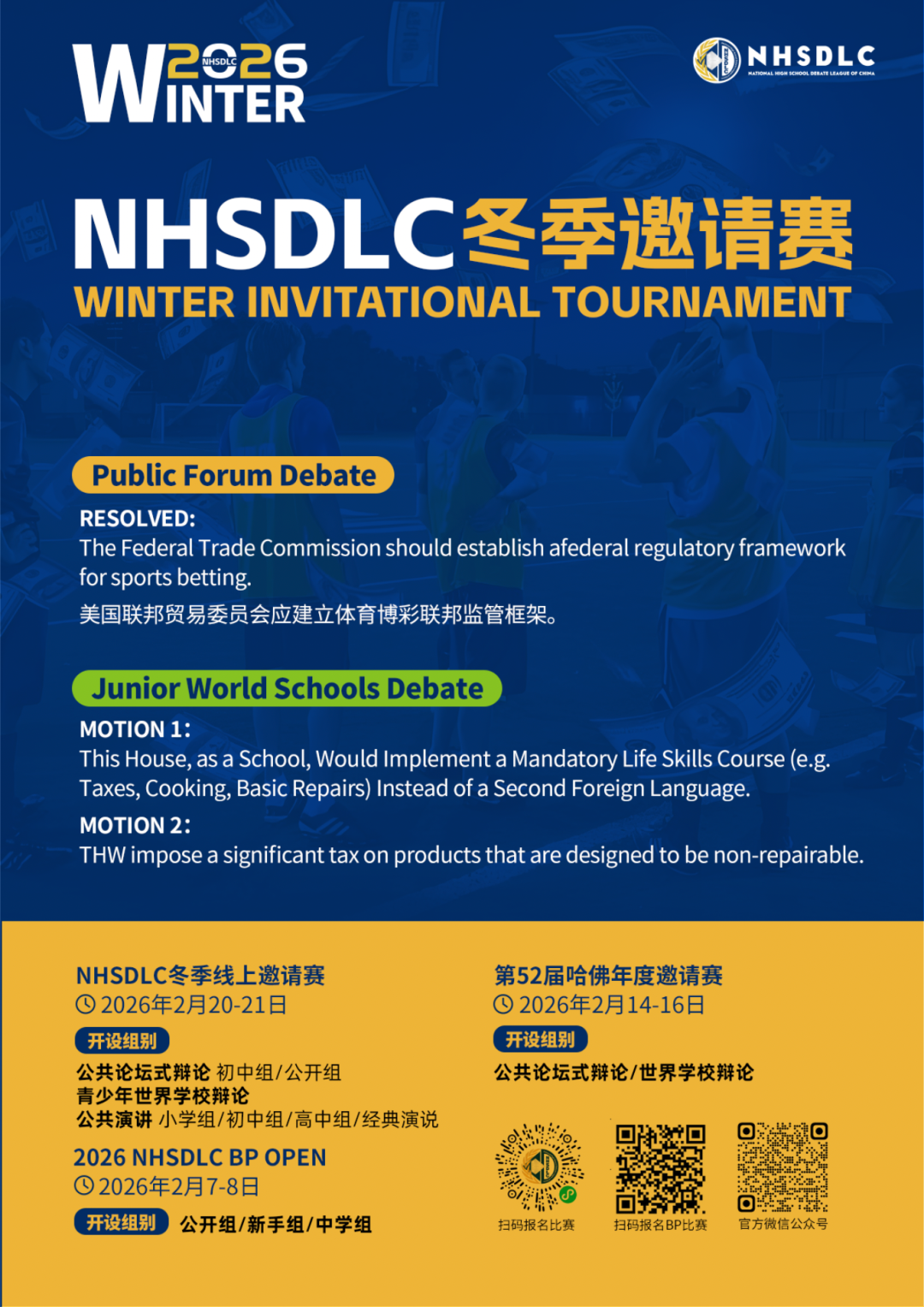
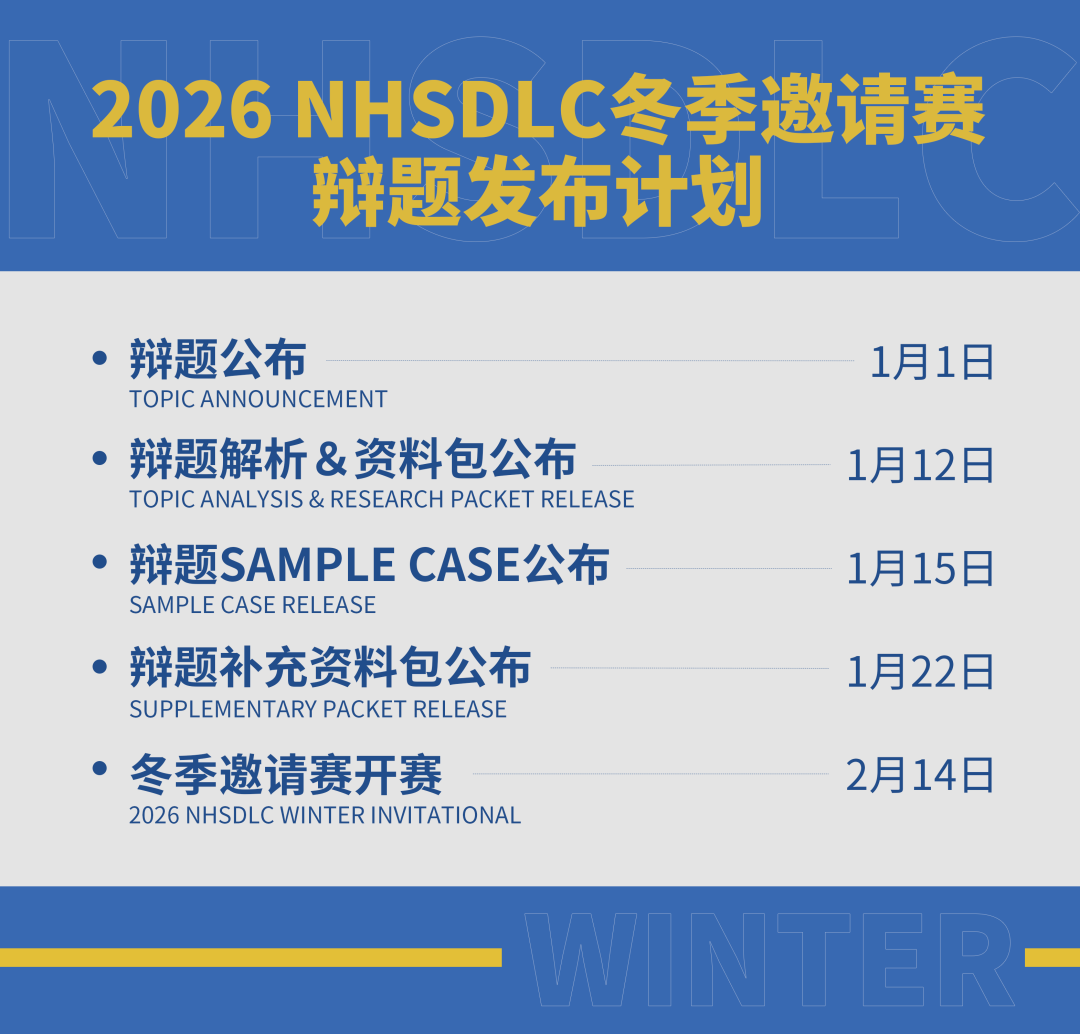
2026 NHSDLC冬季邀请赛
报名火热进行中!!
扫描下图了解详情&报名
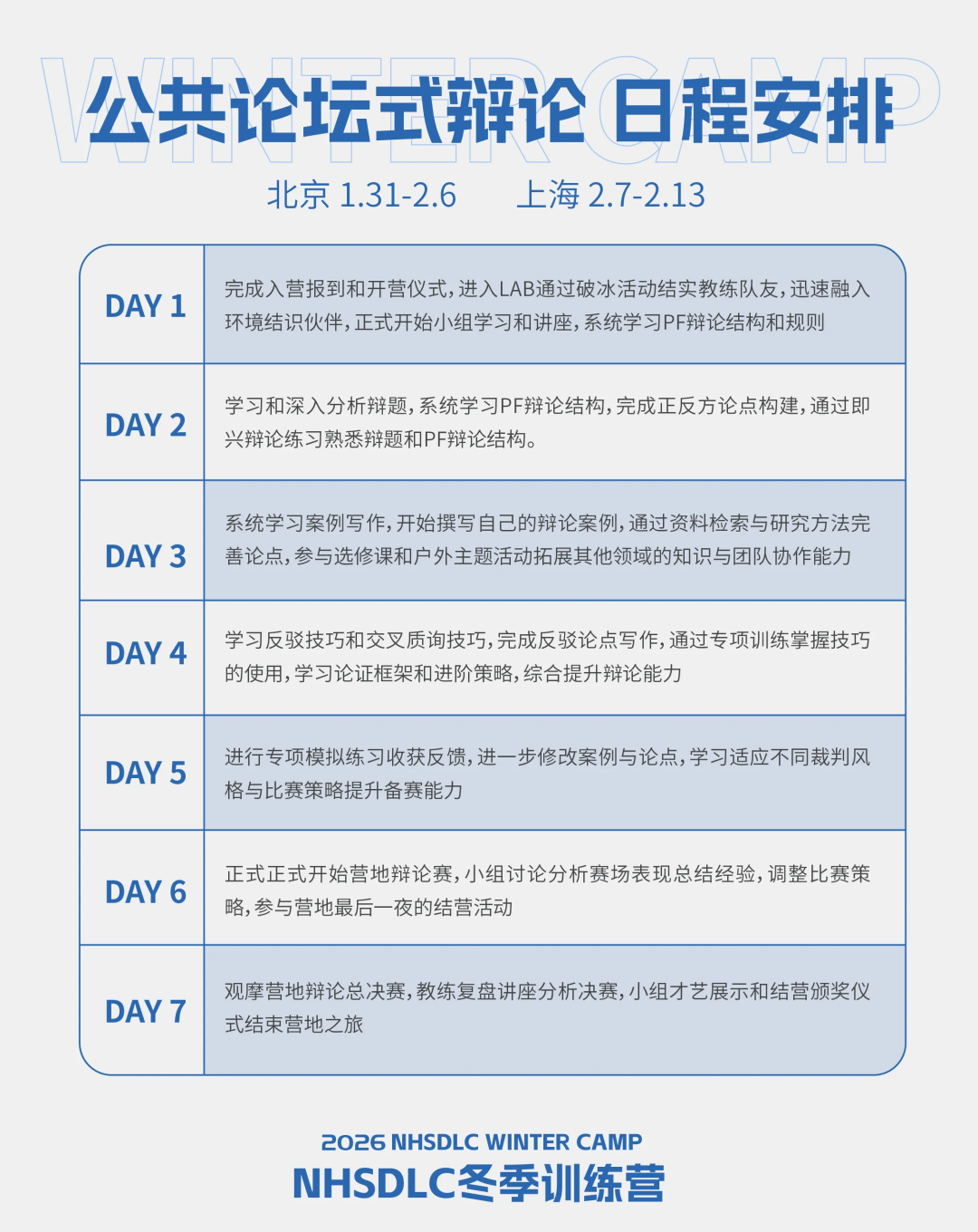
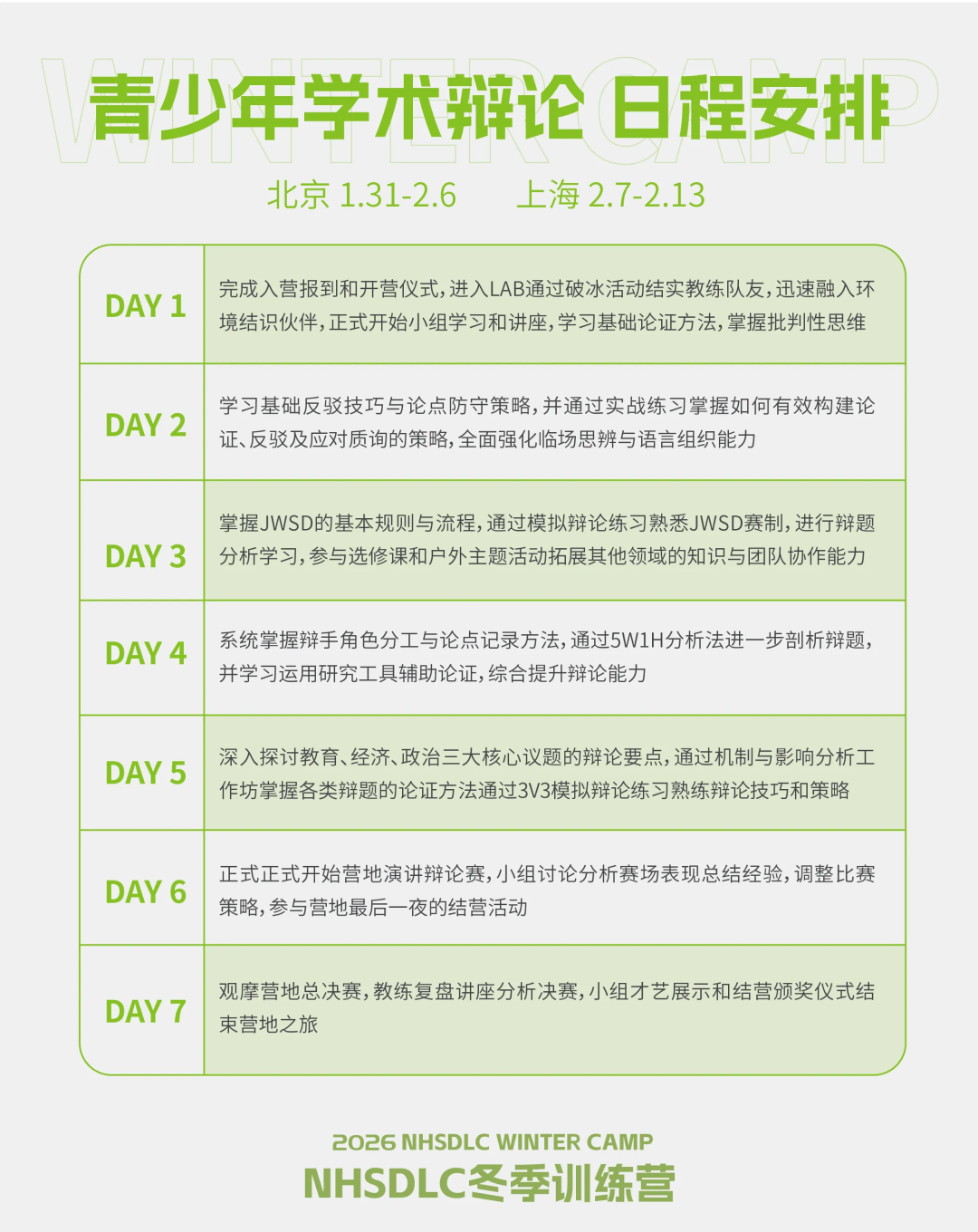
2026 NHSDLC冬季训练营
2月即将开营!
3大主题营地
多维度提升孩子逻辑思维、表达、竞技能力
立即加入我们
与同样怀揣热爱的伙伴并肩
在这个冬天留下难忘回忆!



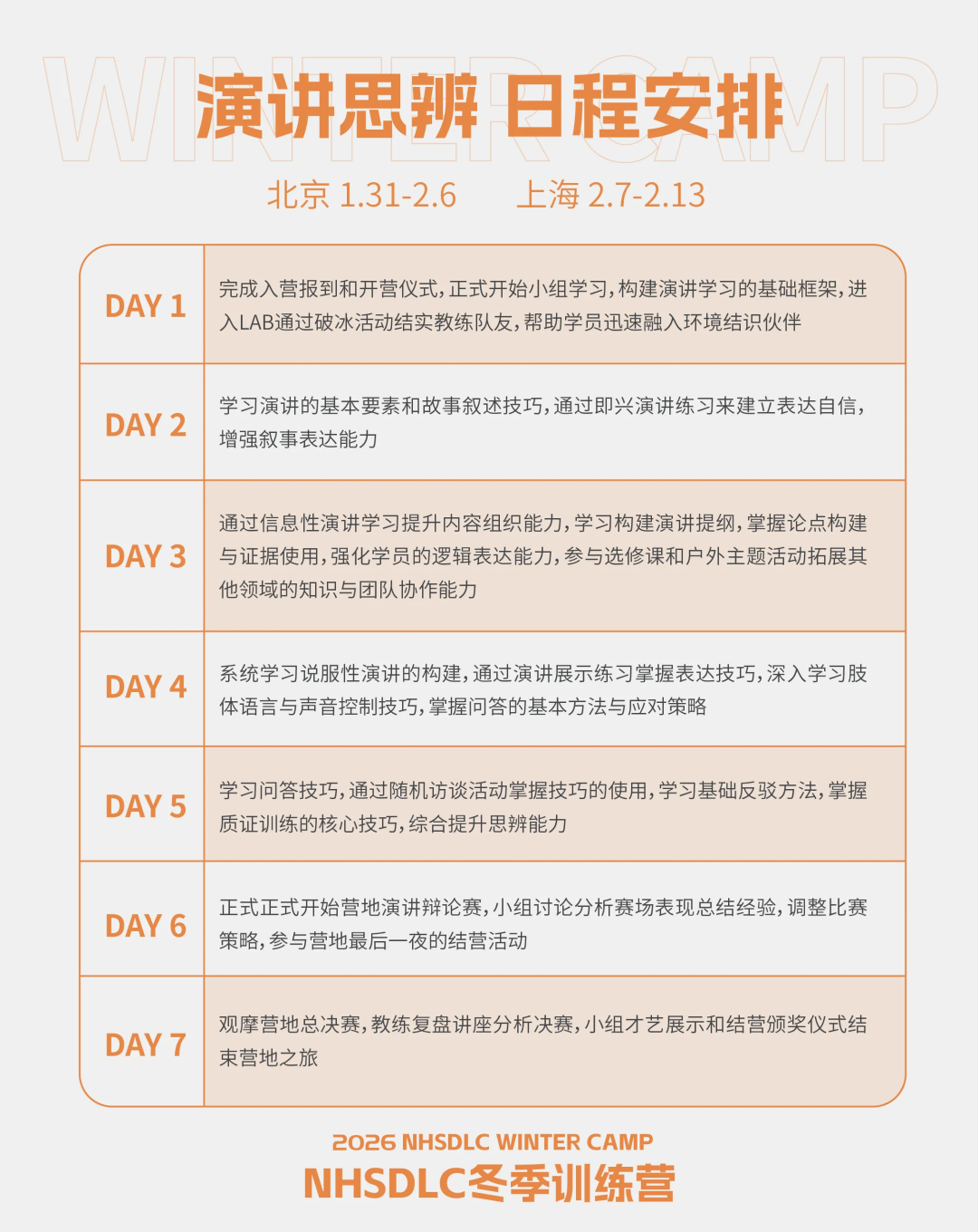

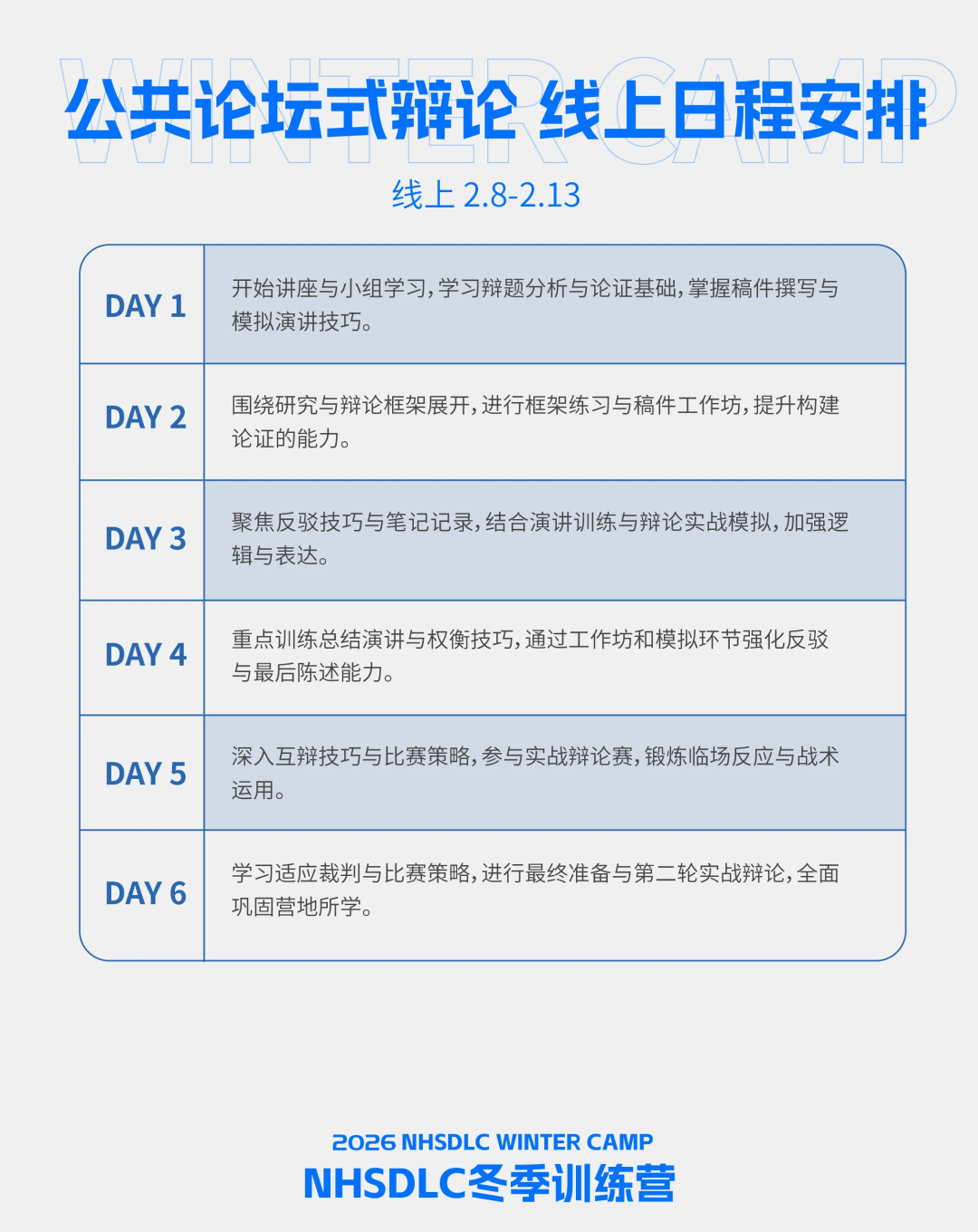

滑动查看更多冬季营地信息