

在2026年世界学者杯第3期WSC Weekly栏目中,我们与小学者一起了解了代餐药丸为何难以成为现实以及背后的原因。在上期的趣味Quiz中,你是否找到了正确答案?现在就让我们一起来揭晓吧!
让你一辈子不用吃饭的神药会到来吗?
Why don't we have food pills to replace meals?
第03期Quiz答案揭晓:
A cartoon about food pills that appears on the newspaper in 1968 is most likely to be titled as
1968年刊登在报纸上的一幅关于“代餐药丸”的漫画,其标题最可能是
A. Freedom for Housewives
主妇的自由
B. End of Human Hunger in 2000人类饥饿终结于2000年
C. Fuel for Your Husband in Five Seconds 五秒钟为丈夫补充能量
D. A Tablet for Two
一片药丸,两人共享
E. The Death of the Gourmet
美食家的消亡
正确答案: B
Key: B
2026年第4期
Weekly Intro
你用的人工智能真的都是机器在工作吗?有没有可能,背后其实藏着“人”?
本期Weekly将带你从历史上的“机械土耳其人”讲起,了解现代产品设计中的“绿野仙踪测试法”,以及人类如何在幕后“扮演智能”,一起来看看吧!
2026 No.4
你用的人工智能可能是人假扮的?
How do hidden humans behind the machine help build technology
一台“会思考”的机器
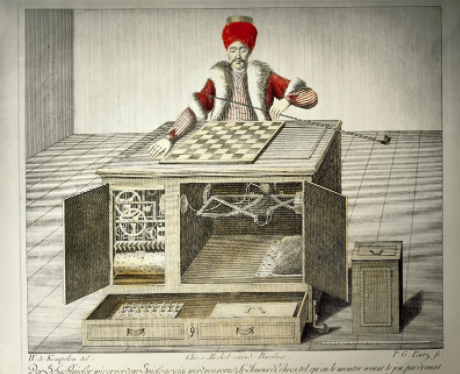
1770 年,维也纳的观众们聚集在一起,见证一件令人震惊的“奇迹”:一台似乎能够思考的机器。它被称为“机械土耳其人”(Mechanical Turk),是一尊等身大小的人形装置,身穿奥斯曼风格长袍,坐在一个柜台后方,面前摆着一副棋盘。这个机器人由发明家沃尔夫冈·冯·肯佩伦(Wolfgang von Kempelen)制造,看起来能够与人类对弈国际象棋,而且经常获胜。观众们为之着迷。在他们眼中,这仿佛是计算机出现几个世纪之前就存在的人工智能。这台“土耳其人”巡游欧洲,与众多著名对手交锋,让公众感到不安,因为它似乎模糊了人类理性与机械装置之间的界限。然而,这个故事最有趣的部分并不在于棋局本身,而在于其中的幻象。装置内部隐藏的并不是机械“大脑”,而是一位真正的人类棋手,他蜷缩在机器结构之间,从内部操控这尊人偶的动作。柜子的设计极为巧妙,肯佩伦可以打开某些面板,并重新排列可见的部件,从而分散观众的注意力,让他们忽略那个隐藏的隔间。
In 1770, audiences in Vienna gathered to witness something astonishing: a machine that seemed able to think.It was called the Mechanical Turk, a life-sized figure dressed in Ottoman robes, seated behind a cabinet and poised over a chessboard.Built by the inventor Wolfgang von Kempelen, the device appeared to play chess against human opponents and often beat them. Spectators were mesmerized. Here, it seemed, was an artificial intelligence centuries before computers. The Turk traveled across Europe, faced famous challengers, and unsettled the public because it seemed to blur the line between human reasoning and machinery. Yet the most interesting part of the story was not the chess itself, but the illusion.Hidden inside the cabinet was not a mechanical brain but a concealed human chess master, cramped among the machinery and controlling the figure's movements from within.The cabinet had been cleverly designed so that von Kempelen could open certain panels and rearrange the visible components in ways that distracted the audience from the hidden compartment.
绿野仙踪测试法
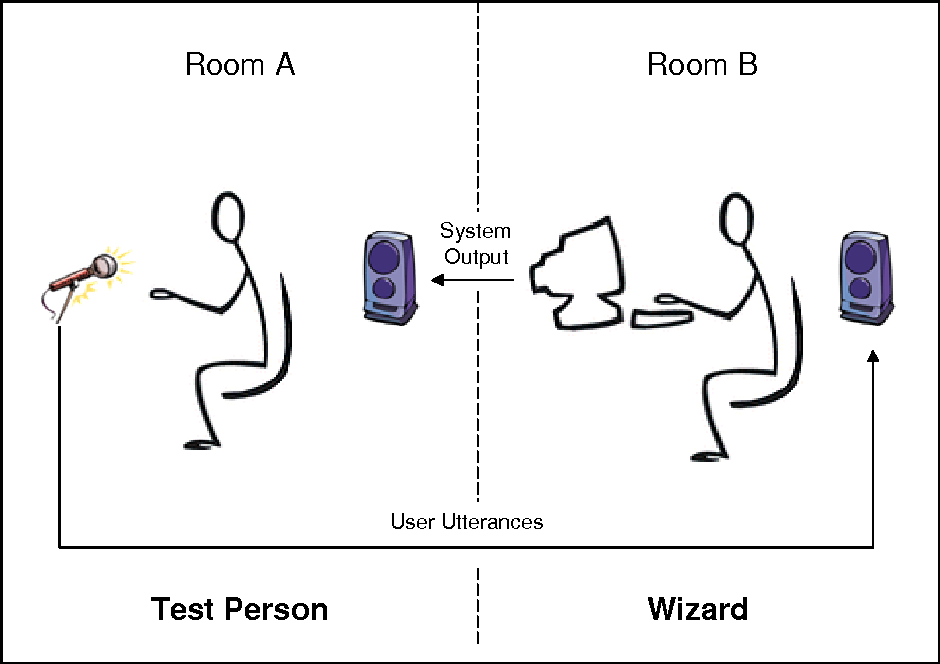
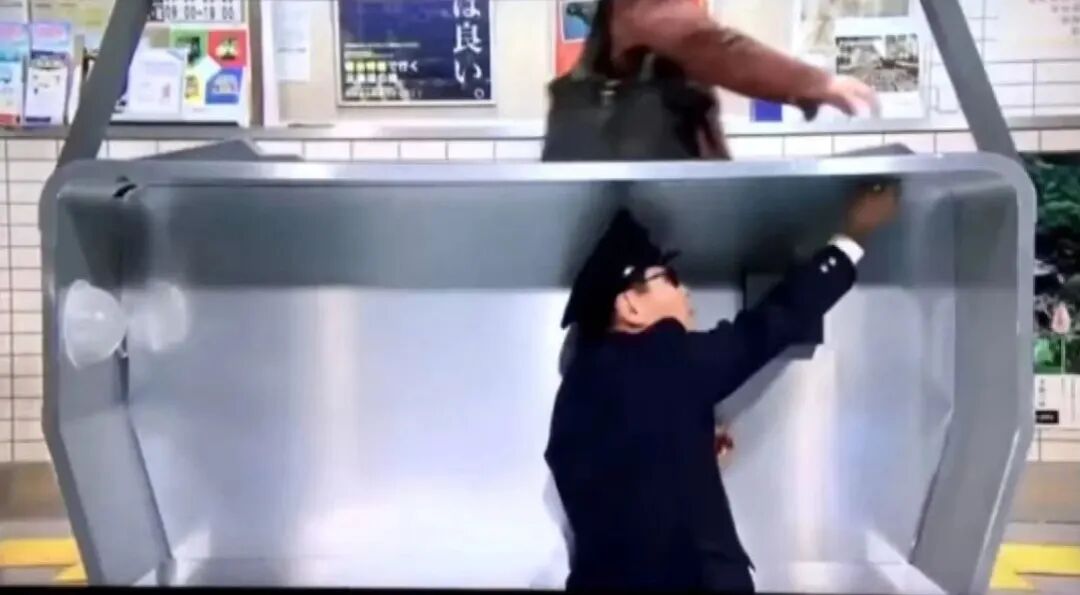
这种幕后操作的方法从未真正消失。事实上,它至今仍被运用于现代产品设计、服务创新以及用户研究中。现代设计师有时会向人们展示一个看似已经完成、能够智能运作的系统,而真正的工作却在幕后由隐藏的人类悄悄完成。目的并非长期欺骗用户,而是在投入昂贵的自动化技术开发之前,先验证一个想法是否有用、是否易于理解、是否真正吸引人。这个方法获得了当代的新名称:“绿野仙踪测试法”(Wizard of Oz testing)。这一名称源自著名的《绿野仙踪》故事:一个看似强大而神秘的巫师,最终被揭示只是一个躲在帷幕后操作装置的普通人。在设计领域,“巫师”指的正是那位隐藏在系统背后、让未完成产品看起来已然完整的人类操作者。

That hidden-operator principle has never entirely disappeared. In fact, it survives today in product design, service innovation, and user research. Modern designers sometimes present people with what seems to be a working intelligent system, while a concealed human quietly performs the actual work behind the scenes. The goal is not to create a fraud in the long term, but to test whether an idea is useful, understandable, and desirable before building the expensive technology needed to automate it.Only after this basic principle is clear do we arrive at its modern name: Wizard of Oz testing.The term evokes the famous story in which a powerful, mysterious figure turns out to be an ordinary person operating behind a curtain.In design, the "wizard" is the hidden human who makes the unfinished system appear complete.
为什么要“假装智能”
当团队希望探索某种产品概念,却又不愿在一开始就投入数月的工程开发成本时,这种方法尤为有用。从零开始构建这些系统既昂贵,又技术复杂,风险也很高。设计师甚至可能不确定用户是否真的想要这样的体验。绿野仙踪测试通过用人工模拟后台运作来解决这一问题。对用户而言,产品看起来运转正常;而在幕后,则有一个人观察互动过程,并手动生成系统回应。这使研究人员能够在真正投入产品开发之前,了解用户的行为方式、他们在哪些地方感到困惑,以及这一产品概念是否能带来真实价值。这种方法在涉及“智能系统”的领域尤为重要,例如聊天机器人、虚拟助手、推荐引擎或无障碍工具等。这些产品往往工程成本最高、复杂度最大,但同时也最依赖用户体验。一个系统即使技术上令人惊叹,也可能因为用户不信任、不理解或不在意而失败。
The method is especially useful when a team wants to explore a product concept without first investing months of engineering effort. Building such systems from scratch can be expensive, technically difficult, and risky. Designers may not even know whether users actually want the experience they are trying to create. Wizard of Oz testing solves this problem by simulating the backend with human labor. To the user, the product appears to function normally. Behind the scenes, however, a person observes the interaction and manually produces the responses.This allows researchers to study how people behave, what confuses them, and whether the concept delivers real value before committing to full development. This method is particularly important in fields involving "intelligent" systems, such as chatbots, virtual assistants, recommendation engines, or accessibility tools. These are often the most expensive and complex products to engineer, yet they are also the ones where user reactions matter most.
如何实现这种“假装”
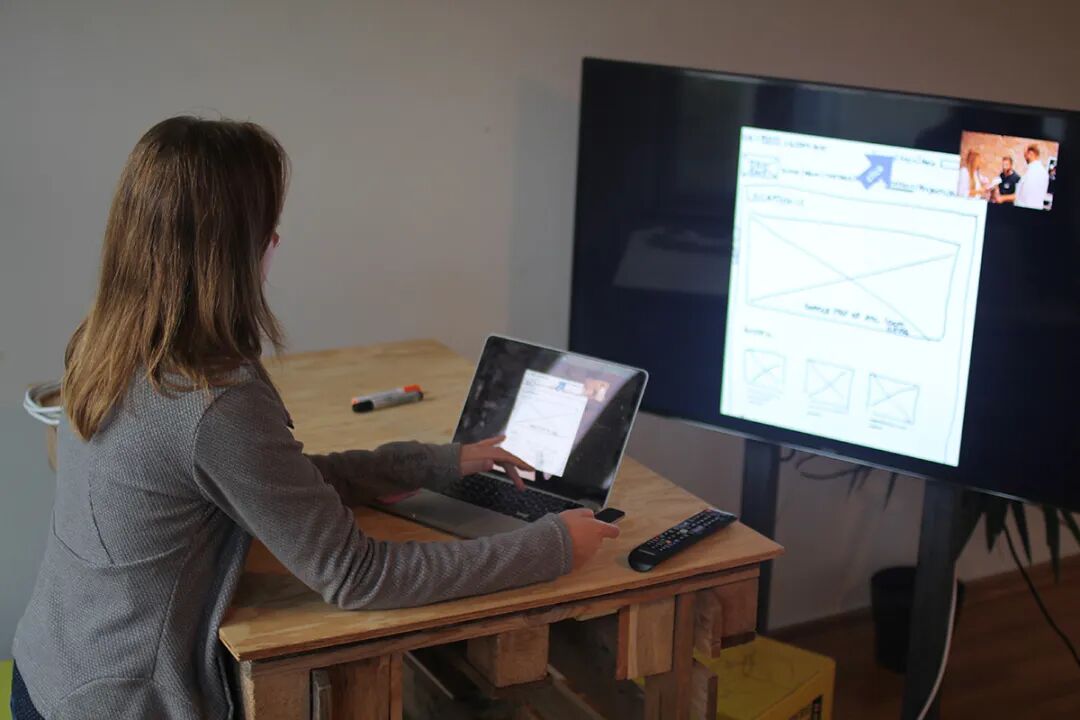
成功运用绿野仙踪测试法需要周密规划。第一步需要明确测试目标:团队究竟是在测试整体体验,还是测试某个具体环节?然后就可以根据所需的真实程度来构建可见的原型,原形可以是纸质界面、简单的数字模型、纸板设备,或仅有少量代码支撑的交互系统。这个“外壳”不必完全具备功能,只需足够可信,让用户能够自然互动,而其余部分由幕后支持来补足。隐藏的人类操作者,也就是“巫师”,在其中扮演关键角色。他们必须观察参与者的行为,并以流畅、及时且可信的方式作出回应。因此,系统往往需要事先精心布置与排练。团队通常会分工合作,由“巫师”负责实时响应,而观察者则记录用户反应。测试环境可能包括隐藏房间、单向镜,或远程视频连接,使操作者能够观察参与者,而参与者却无法看到操作者。如果执行得当,用户会把这个原型体验为一个完整一致的产品,而不是一堆人工拼接的干预。
Successful use of this method requires careful planning. The first step is to define what exactly is being tested. Is the team testing the whole experience, or just one part of it? Once those questions are clear, the visible prototype can be built using whatever level of realism is needed—paper screens, simple digital mock-ups, cardboard devices, or lightly coded interfaces.The visible shell does not need to be fully functional. It only needs to be convincing enough that the user can interact with it naturally while the hidden support fills in the rest. The hidden human operators, or "wizards", play a critical role. They must watch what the participant does and respond in ways that feel smooth, timely, and believable. For that reason, the system must be carefully rigged and rehearsed beforehand. Teams often divide responsibilities between the wizard and observers. The wizard handles live responses, while observers record user reactions. The testing space may include a hidden room, a one-way mirror, or a remote video link so that the operator can see the participant without being seen. If done well, the user experiences the prototype as a coherent product rather than a patchwork of manual interventions.
技术之外的思考
绿野仙踪测试法的一个现代案例来自 Fireflies.ai,这是一家以 AI 会议转录和笔记功能闻名的公司。据创始人所说,在产品尚未实现完全自动化之前,他们曾告诉客户,一位 AI 助手会加入会议并在会后发送笔记。实际上,是创始人自己加入了会议通话、保持静音、手动做笔记,然后再把记录发给客户。在他们真正开发出后来的AI转录产品从而成为“独角兽”科技公司之前,他们通过使用这种“人工扮演智能”的方法参加了一百多场会议来维持公司运转、支付房租。从产品测试的角度来看,这个做法颇为巧妙,但也在用户之间引发了批评和争议。其中一个担忧是“知情同意”:用户可能同意使用自动化工具,却未必同意有隐藏的人类参与,尤其是在商业会议这样敏感的场景中。另一个问题是隐私。会议中往往包含机密、战略性或个人信息,如果参与者知道有一位陌生人正悄悄旁听,而不是由软件系统在处理数据,他们对风险的判断可能会完全不同。这个案例提醒我们,使用绿野仙踪测试法同样具有伦理层面的考量。由于用户在一段时间内会相信自己正在与一个真正运作的系统互动,设计师必须以负责任的方式使用这种技术,并在事后说明测试设置。测试的目的应是为研究而进行的短期模拟,而不是长期的操控或误导。
A modern example comes from Fireflies.ai, a company known for AI meeting transcription and note-taking. Before the product was fully automated, the founders reportedly told customers that an AI assistant would join meetings and send notes afterward. In reality, the founders themselves joined the calls, stayed silent, took notes manually, and sent them later. Before they actually developed the AI transcription product that would later make them a "unicorn" tech company, they kept the business afloat and paid the rent by attending over a hundred meetings using this "human-pretending-to-be-AI" approach. That example is clever from a product-testing perspective, but it also led to controversies among users.One concern is informed consent: users may have agreed to an automated tool but not to hidden human participation, especially in a setting as sensitive as a business meeting. Another issue is privacy.Meetings often contain confidential, strategic, or personal information, and participants might judge the risks differently if they know a human stranger is silently present rather than a software system processing data. This example reminds us of the ethical side to the use of Wizard of Oz approach. Because users temporarily believe they are interacting with a working system, designers must use the technique responsibly and reveal the setup afterward.The purpose is short-term simulation for research, not long-term manipulation.
Weekly 关键词 Key Words
Wolfgang von Kempelen
沃尔夫冈·冯·肯佩伦
Wizard of Oz testing
绿野仙踪测试法
所属话题
Monkey See, Monkey Prototype
相关阅读
https://slate.com/human-interest/2015/08/the-turk-a-chess-playing-robot-was-a-hoax-that-started-an-early-conversation-about-ai.html
https://www.thisisservicedesigndoing.com/methods/wizard-of-oz-approaches
Weekly FUN Quiz
相信现在你已经知道了隐藏在人机背后的“人工智能”是如何运作的了吧!那就快来参与本期Weekly FUN Quiz👇,告诉老师你的答案吧!
Quiz
Your company wants to sell a robot that automatically prepares breakfast. To use the Wizard of Oz technique in product testing, you will
你的公司计划销售一款能自动制作早餐的机器人。若要在产品测试中运用绿野仙踪测试法,你将
A. Secretly use a hidden human to remotely operate the robot's interactive responses. 秘密安排一名隐藏人员远程操控机器人的交互响应
B. Have a human chef openly perform the service to manually test the value of the menu. 安排一名真人厨师公开提供服务以测试该菜单的价值
C. Use a non-working physical mockup to interview users about their expectations. 使用无法运行的实体模型向用户了解他们的期望
D. Play a video showing an Al stimulation of the cooking robot. 播放一段展示烹饪机器人人工智能模拟的视频
E. Conduct a survey to collect users' preference for the menu. 开展问卷调查收集用户对菜单的偏好