

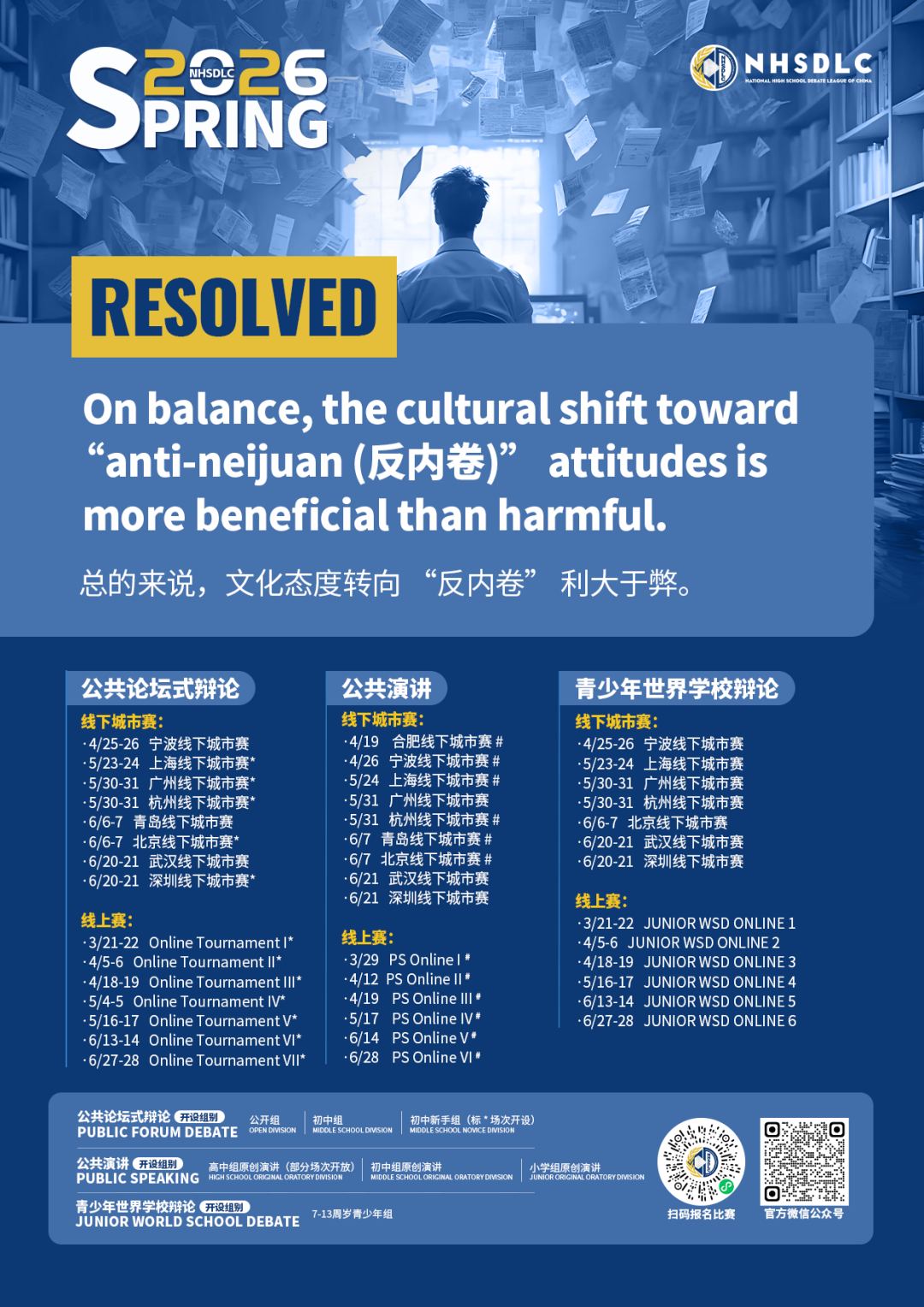
2026年春季常规赛已正式打响!
尽管同学们都已经为即将到来的赛事做了充足的准备
但仍有同学反馈觉得自己的资料库“差一口气”
别担心,补给来了!
今天我们特别为大家开启
春季PF辩题锦囊系列
第一期首先从“位置性商品与‘体育场’陷阱”出发
为大家细细拆解
在经济学角度中“内卷”的具象影响
希望本期内容能够为大家带来
崭新的灵感与思考~

大多数经济学思维都建立在“绝对商品”(Absolute Goods)的基础之上。比如,你买了一台性能更强的电脑,工作效率随之提高;你学了一门新外语,技能储备便得以扩充。在这些场景下,你的收益并不一定要以牺牲他人为代价。
Most economic thinking is based on "absolute goods." If you buy a faster computer, your work becomes more efficient. If you learn a new language, your skill set expands. In these cases, your gain does not inherently come at someone else’s expense.
然而,正如经济学家弗雷德·赫希(Fred Hirsch)在1976年的《增长的社会极限》中所言,以及罗伯特·弗兰克(Robert Frank)在《达尔文经济学》中的进一步阐释:现代社会的成功日益由“位置性商品”(Positional Goods)所定义。这类商品的价值,几乎完全取决于你与他人相比的相对排位。
However, as economist Fred Hirsch argued in Social Limits to Growth (1976), and as Robert Frank expanded in The Darwin Economy, modern success is increasingly defined by Positional Goods. These are goods whose value is derived almost exclusively from how much you have relative to others.
以学历通胀为例。美国劳工统计局数据显示,自20世纪70年代以来,硕士学位的授予数量翻了三倍。1973年,高中学历足以胜任47%的白领职位;而今天,硕士已沦为“新本科”。我们投入更多金钱与时间留在学校,往往并非为了习得独特技能,而仅仅是为了“不掉队”。这就是陷阱的首个信号:当人人都有学位时,学位的“位置价值”便消失殆尽。结果是:大家背负了更多债务,耗费了更多青春,但相对就业竞争力却原地踏步。
Consider Credential Inflation. According to the U.S. Bureau of Labor Statistics, the number of Master’s degrees awarded has tripled since the 1970s. In 1973, a high school diploma was sufficient for 47% of white-collar roles; today, a Master’s is the "new Bachelor’s." We are spending more time and money in school not to gain unique knowledge, but to avoid falling behind. This is the first sign of the trap: when everyone has a degree, the "positional value" of that degree vanishes, leaving everyone with more debt and less time, but the same relative job prospects.

想要直观地理解这一陷阱,最贴切的莫过于“体育场效应”。想象成千上万的人在观看足球赛,起初全员落座,视野清晰。突然,前排为了看得更清而站了起来。短期内,他们获得了竞争优势。但这迫使第二排也随之站立,连锁反应下,几分钟内,全场观众都陷入了站立观赛的窘境。
The most striking way to visualize this trap is through the Stadium Analogy. Imagine a massive crowd watching a football match. Everyone is seated and has a clear view. Suddenly, a few people in the front row stand up to get a slightly better view. For a moment, they have a competitive advantage. However, their action forces the second row to stand, and so on. Within minutes, the entire audience is standing.
结果就形成了这种低效的“平衡”:

1. 没人真正占到便宜:大家的视野跟坐着的时候一模一样,相对优势完全被抵消了。
2. 代价却大了很多:现在每个人都累得够呛。在职场里,这就是“出席主义”。OECD的数据显示了一个奇怪的现象:工作时间最长的国家(如墨西哥、韩国),每小时创造的GDP反而比工作时间短的国家(如德国、挪威)低得多。大家都在“站着”(拼命加班),可“视野”(实际产出)一点没变好。
The result is an Inefficient Equilibrium:
1. Zero Net Gain: No one’s view is better than it was when they were seated. The relative advantage has been neutralized.
2. Increased Cost: Everyone is now physically exhausted. In the corporate world, this manifests as "Presenteeism." OECD data reveals a startling productivity paradox: countries with the highest average working hours (like Mexico and South Korea) often have significantly lower GDP per hour worked than countries with shorter weeks (like Germany or Norway). We are "standing" (working overtime), but the "view" (economic output) isn't improving.
这个道理不是只停留在书本上,它真真切切影响着几百万人的生活。拿学区房来说吧:当每个家长都多拼20%的劲去买名校附近的房子时,那些房子的价格只会越炒越高,但学校的学位名额却一个都没增加。
This theory isn't just academic; it dictates the lives of millions. Take the market for school-district housing (学区房). When every parent works 20% harder to afford a premium apartment near an elite school, the price of those apartments simply rises. The number of seats in the school remains the same.
汇丰银行《教育的价值》报告指出,中国大陆93%的家长在支付私人补习费用——占比全球最高。数亿资金涌入了一个无法创造更多精英名额、只能推高“准入门票”价格的系统。这是典型的资源错配:本可用于创新或改善家庭福利的财富,在零和博弈的竞价大战中灰飞烟灭。
The HSBC "Value of Education" report notes that 93% of parents inMainland of China pay for private tutoring—the highest rate globally. Billions of dollars are poured into a system that does not create more elite spots, but merely raises the "buy-in" price for the existing spots. This is a classic misallocation of resources: wealth that could have gone toward innovation or family well-being is instead incinerated in a zero-sum bidding war.
为什么大家不干脆坐回去呢?这就是一个集体行动的难题。如果你一个人坐下来,而别人都站着,你就什么都没有了。在科技行业,“996”(早九晚九、一周六天)已经成了保住饭碗的生存法则。要是哪个工程师五点下班,就可能被贴上“不够努力”的标签,工作都保不住。
Why don't people just sit back down? This is a Collective Action Problem. If you sit down while everyone else is standing, you see nothing. In the tech sector, the "996" schedule (9 am to 9 pm, 6 days a week) became a survival mechanism. If one engineer leaves at 5 pm, they risk being labeled "unproductive" and losing their livelihood.
可证据却显示,“坐下来”其实效率更高。微软日本做过一个很有名的试验:强制大家每周只上四天班——相当于集体“坐下”——结果生产力一下子提高了40%。员工休息好了,注意力更集中,创意也多了。“站着”不但没帮上忙,反而拖了后腿。
However, evidence suggests that "sitting down" is actually more efficient. A landmark trial by Microsoft Japan found that when they forced a 4-day workweek—essentially a collective "sitting down"—productivity jumped by 40%. The employees were better rested, more focused, and more creative. The "standing" wasn't helping; it was hurting.
所以,现在大家越来越接受“反内卷”的心态,这其实是一种很重要的改变。它不是简单的“懒”,而是一种让大家一起协调的办法。
This is where the cultural shift toward "Anti-Neijuan" attitudes becomes transformative. It is not merely a trend of "laziness"; it is a social coordination mechanism.
文化态度就像一份“软性社会契约”。当整代人开始认同“躺平”或拒绝崇尚过度劳累时,它降低了“坐下来”的社会与心理成本。若社会不再奖赏那些无谓加班到深夜的人,“站着”便失去了机构感。这种转向让大众能够集体回归“坐姿”,而不必担心被那些拒绝停下的人“踩踏”。
Cultural attitudes act as a "soft" social contract. When a generation collectively begins to value "lying flat" (Tang Ping) or rejects the glorification of extreme overwork, it lowers the social and psychological penalty for "sitting down." If the culture stops rewarding the person who stays until midnight for no reason, the "standing" loses its prestige. The shift allows the crowd to collectively return to a seated position without the fear of being "trampled" by those who refuse to stop.
2026 NHSDLC春季常规赛
正在火热报名中!
扫描下方图片小程序报名

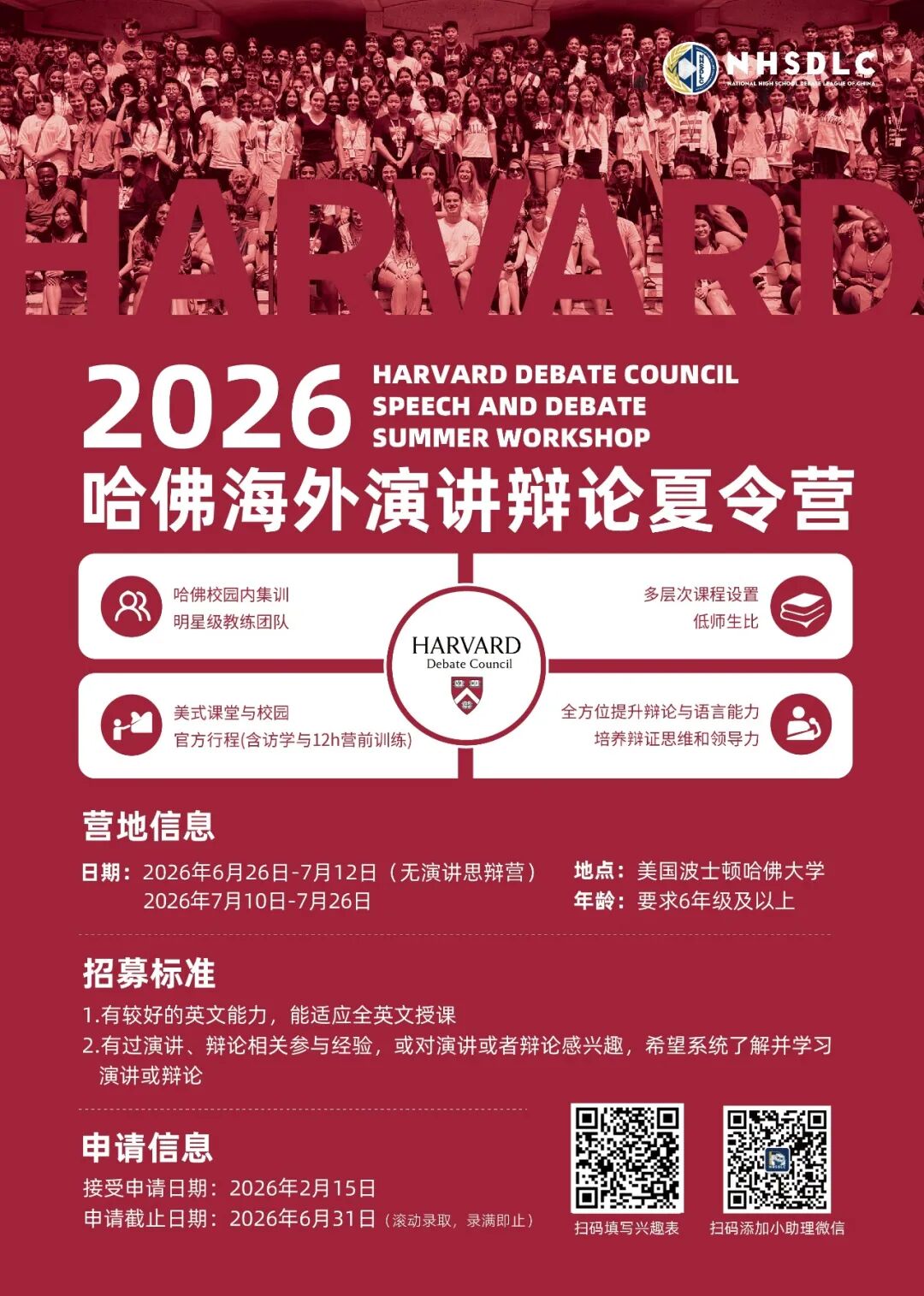
2026 哈佛暑期营地来袭!
扫描下图二维码即刻报名
席位有限 报满即止