

海洋覆盖了地球约71%的表面,是生命的起源,也是人类文明的重要依托。从古老的航海探索到今天的海洋科学研究,人类始终与海洋保持着紧密联系。然而,随着全球气候变化与环境问题的加剧,海洋生态正面临前所未有的挑战。
为了鼓励全球青少年关注海洋、理解海洋,并通过创意表达人与海洋之间的深刻联系,全球规模最大的创意艺术类青年环保项目——海洋意识大赛2026正在进行中。本次大赛面向世界各地的青少年,通过艺术创作、故事表达与创意思考,引导年轻一代思考海洋如何塑造我们的生活、文化与未来。
2026年主题
你的故事,我们的海洋:海洋如何滋养、保护和激励我们
2026年海洋意识大赛—— “你的故事,我们的海洋”——鼓励你探索海洋滋养、保护和启发我们的多种方式。我们邀请你思考你与海洋的个人联系——无论你身处沿海还是内陆——以及海洋为你的生活带来的价值。海洋的益处广泛而多元,涵盖粮食生产、气候调节和艺术灵感等方方面面。浏览各个子主题,探索与你产生共鸣的话题。通过艺术、写作、表演、电影或多媒体形式,分享海洋如何塑造了你的故事。海洋是如何滋养、保护和启发你的?
比赛时间
作品提交截止日期:2026年6月8日晚上11:59(美国东部时间)
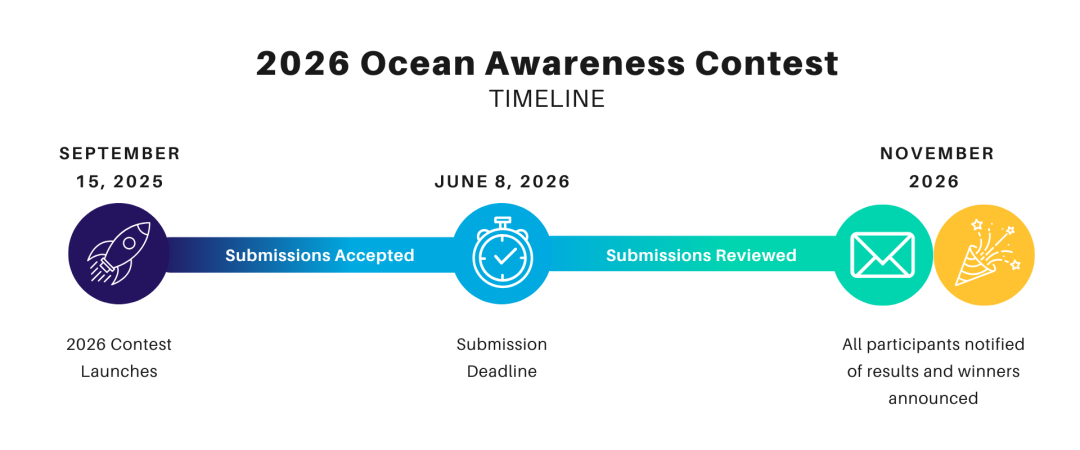
2026年比赛获奖者将于2026年11月下旬公布。
适合学生
全球11至18岁的学生均可报名参加海洋意识竞赛。根据参赛时的年龄选择相应的组别:
- 青少年组: 11-14岁
- 高级组: 15-18岁
学生可以个人或以俱乐部、班级或任何规模的小组名义参加。所有学生必须提供一位成年指导老师(教师、家长、导师等)的联系方式。已进入大学或学院学习的学生不符合参赛资格。
挑战内容
Sustains
From the fish sustaining coastal communities to medicines derived from jellyfish, the ocean feeds us and provides us with materials integral to countless lives. We create glass from sand, extract ingredients from algae to thicken foods like ice cream, and harvest pearls from oysters. Beyond these physical resources, the ocean produces over half of the oxygen we breathe and helps drive the water cycle by fueling evaporation and rainfall. It sustains our lives through natural processes that are not only practical and economic, but also deeply connected to our cultures and survival. What are some meaningful or unexpected ways the ocean provides for you or your community? In what ways does the ocean provide beyond physical resources—such as emotionally, spiritually, or culturally?
But while the ocean sustains us, it also relies on us to sustain and protect it in return. Reciprocity, a concept deeply rooted in the worldviews of many Indigenous cultures worldwide, emphasizes a balanced, respectful relationship between humans and the natural world. Through this view, accepting the ocean’s sustenance is not a one-way transaction but an obligatory action that comes with giving back, whether through acts of stewardship or restraint in regards to resource use. This sub-theme invites you to explore what it means to be sustained by the ocean and ensure that it can nourish life for generations to come. What local traditions, practices, or stories reflect a reciprocal relationship with the ocean? What might a reciprocal relationship look like? What barriers—social, political, or economic—stand in the way of true reciprocity with the ocean, and how might they be challenged?
Protects
Just as the ocean plays a protective role by shaping coastal terrain to mitigate storm damage, it also serves as a climate buffer, acting as a carbon sink and absorbing heat. Mangroves prevent erosion of our coasts and protect us from natural disasters such as hurricanes and storm surges. The ocean itself acts as a carbon sink, absorbing about a quarter of the carbon dioxide we emit and helping to regulate the Earth’s climate by reducing the severity of global warming. Yet as it absorbs CO2, it acidifies, harming wildlife, and as it absorbs heat, countless species must alter migrational pathways. How can we better prepare for natural disasters by working with, not against, nature? In what ways do natural disasters reveal environmental injustice or unequal vulnerability?
While the ocean does so much to protect us from natural disasters, and even from ourselves, there is a limit to how much it can take before the balance shifts in a dangerous direction. Just as it protects us, we must also protect it in return, maintaining the delicate balance it has upheld for so long. Protecting the environment isn’t just about preserving beauty. It’s about ensuring stability, resilience, and survival in an age of rapid change. This sub-theme invites you to explore how natural systems protect us and the reciprocity of this relationship. Which environments around you act as buffers to environmental change? Are they protected? What would the world look like without these buffers? What can we do to prevent that future?
Inspires
From the hydrodynamic hulls of ancient boats, shaped to mimic the forms of darting fish, to the tales of sea gods preserved by myth, the ocean has long been our source of awe and creativity. It has served as the stage for legends like Homer’s Odyssey, inspired the haunting sea ballads of coastal communities, and shaped the settings of iconic films such as The Little Mermaid and art like The Great Wave off Kanagawa. It has even shaped our understanding of technology through biomimicry, with seashells exhibiting the golden ratio in the angle of their spirals and sponges serving as inspiration for sturdy architecture. What technological advances do we owe to the ocean? Is there a specific ocean species that you find brilliantly designed—something that humans could learn from or replicate?
The ocean’s influence is carved into pottery dating back centuries and engraved in indigenous knowledge and histories. Just as we did then, we still love to create. But the wellbeing of the ocean, our ancient muse, is not as it once was. As pollution, warming, acidification, and much more pressure this massive ecosystem and the life within it, it is crucial to remember its importance to our many communities.
With the many gifts of the ocean comes the question, “what would we do without it?” Just how deeply is the ocean ingrained in our joys, hopes, and successes? This subtheme invites you to explore the ways the natural world inspires you and the world you live in, as well as the importance of what we stand to lose. Reflect on the ocean influences you see around you and what they mean for your community and beyond. What are some of the earliest ocean-related films, books, or songs that resonate with you and why? How do they shape your perception of the ocean? What might be lost culturally if younger generations grow up without ocean stories or influences? If some of your favorite ocean-related characters were real, how do you think they’d react to the state of the oceans today?
比赛形式
接受以下格式的稿件:
- 视觉艺术:手工制作
- 视觉艺术:数字艺术
- 诗歌与朗诵
- 创意写作
- 电影
- 表演艺术:音乐与舞蹈
- 互动与多媒体
学生每个类别限提交一首作品;例如,您可以提交一首诗(诗歌与朗诵类)和一首歌曲(表演艺术类),但不能提交两首诗。
为了获得评审委员会的认可,您的参赛作品、辅助材料(例如歌词)和相关提示必须使用英文。
欢迎您提交任何语言的电影或表演艺术作品,但视频必须有英文字幕。
比赛评审
每份参赛作品均由至少三个评审委员会评审,评审过程分为三轮。评审委员会将考虑以下因素:
- 参赛作品与大赛年度主题的契合程度;
- 表演艺术表达、原创性和想象力;
- 工艺水平,包括选定的质量、技术和技巧;注重的细节;以及沟通问题的准确性;
- 提交的内容是否符合类别要求(例如长度、文件类型等)。
为什么要参与?
- 加入 Bow Seat 的全球运动,与超过 42,000 名关心海洋、环境正义和气候行动的年轻创意人士一起,为世界上最大的青年环境艺术收藏做出贡献。
- 了解环境问题、自然以及你与周围世界的关系。深入探索 Bow Seat 的资源工作室,了解更多相关议题;寻找致力于保护我们蓝色星球的艺术家和组织;并发现你可以参与其中的方式。
- 提升你的沟通能力、批判性思维能力、创造力和环保倡导能力。运用你的艺术作品来提高人们对重要环境问题的认识。
- 建立你的作品集,用你喜欢的媒介创作艺术作品,或者尝试一种新的媒介!获得参与证书,为你的简历增添光彩。
- 向全世界展示你的才华。通过艺术展览、出版物、社交媒体活动和奖学金,Bow Seat 提升多元化青年的声音,以促进环境保护和倡导方面的对话和参与。
- 您将有机会获得特殊机会,例如加入未来蓝青年委员会。往届项目参与者也曾担任Bow Seat实习生和比赛评委!
- 赢取高达 1000 美元的现金奖励!
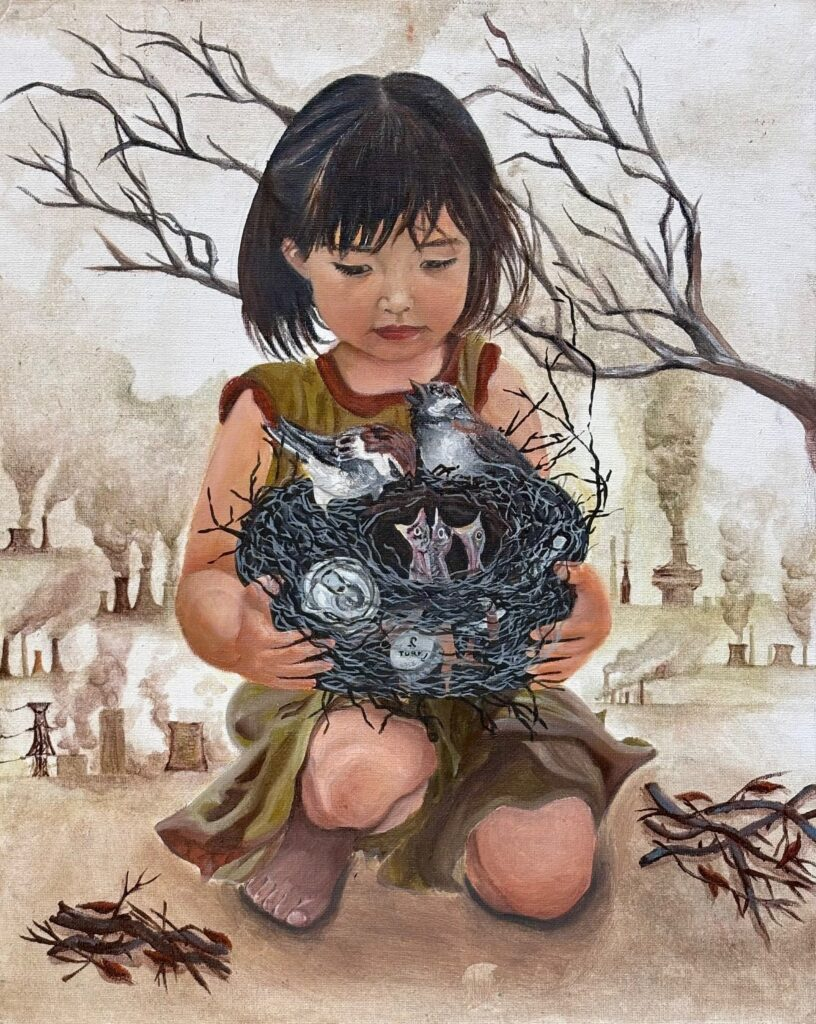
往届获奖作品
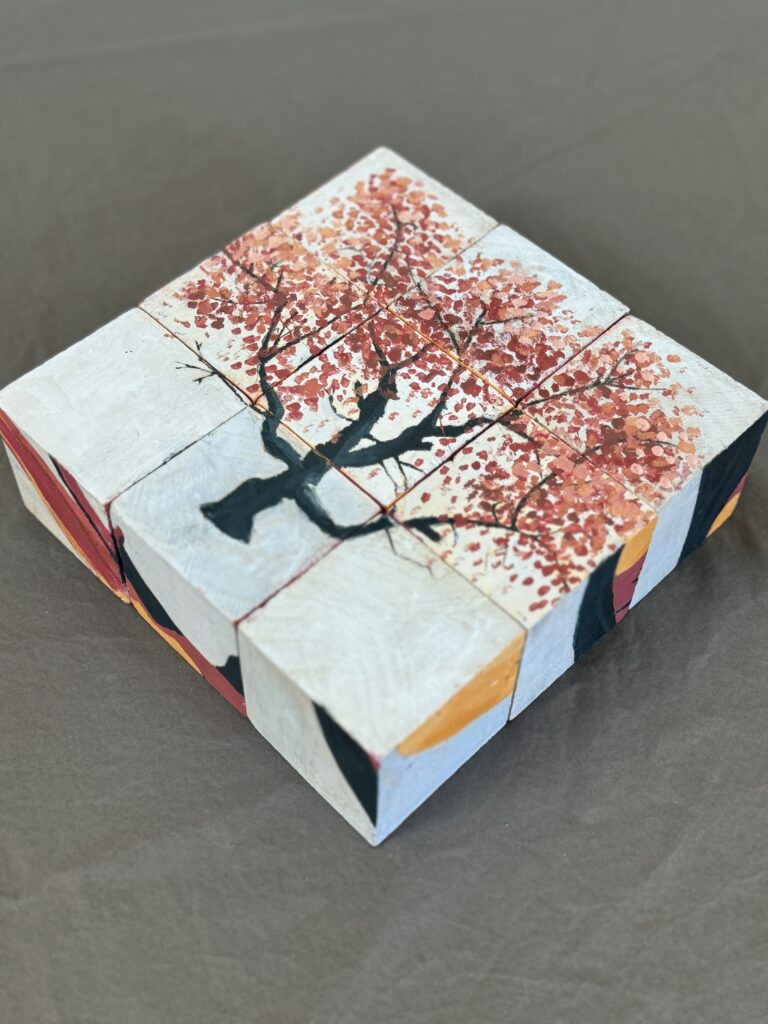
Blurred Boundaries
Sharon Yitong Qian
A Jar of Yangtze
Yichen Li
Nanjing, China
2025, Senior, Creative Writing
Standing atop a cliff, I stared at the vast Yangtze River sprawling beneath my feet. Mom extended her hand, pointing toward the deep water: “There—there used to be our hometown.”
I felt a bit dizzy, gazing at the clear river tinged with a trace of murky yellow. Light filtered through the broken clouds between the cliffs, flickering on the water’s surface. Where is it? Beneath the water?
For some reason, the water brought my mind back to the old pickle jar at home in Nanjing, downstream of the same river below us. When the jar is opened, a sliver of light filters in—the thick, amber-colored brine, rich and clear.
As a child, I always looked forward to that moment. I would crouch by the jar, watching as Mom lifted the inverted chipped white porcelain bowl, water droplets sliding down the rim. A sour aroma would rise from the dark mouth of the jar as she pulled out a handful of long beans, a few slices of ginger, and two or three chili peppers. Sometimes they went straight to the table—cold, crisp, and tangy—or were tossed into hot oil with minced meat, sizzling into spicy delight on the tongue.
Then the old jar would be returned to a corner of the balcony, the bowl placed upside down again. Both light and my gaze were shut out, and the brine returned to its meditative darkness. Mom wouldn’t let me open the jar on a whim, making it even more mysterious. What kind of magic transformed vegetables into such flavor after months of confinement? I asked her again and again, but she only said, “It’s the power of that brine.”
“Water? The same water I use every day? How could water have such power?”
“Water is more than just water. Of course it has its power.”
So I continued to crouch by the jar, never daring to lift the lid, only staring at the edge of the porcelain bowl as it slowly released a bubble—imagining that little water spirits were crafting their own kingdom inside.
Not until elementary school did I understand—this wasn’t magic. It was fermentation. Lactic acid bacteria thriving in anaerobic conditions. The sourness? Just a byproduct of their metabolism. After that, when I bent down to look at the jar again, it seemed smaller, its old clay body stained with dirt or dust. I knew now that inside, countless bacteria were simply going about their lives.
If it was just a matter of fermentation, I thought, I should be able to make pickles too, right? Following instructions from the textbook, I tried making my own pickles—jars, vegetables, salt. One month, two months… Eventually, after tossing out my fifth foul-smelling jar, Mom glanced over and laughed.
“I told you, it’s the water’s power. Not just any water—this is old brine brought from our hometown in Kaixian.”
“What? All the way from Chongqing?”
“Yes. Scooped from your grandmother’s old pickle vat, it’s decades old.”
“But why can only the old brine make good pickles?”
“Your grandmother inherited it from her elders. It started with well water, and through batch after batch of fermentation, the microbial balance inside was gradually perfected for pickling.”
“How amazing—like a micro-ecosystem created together by Grandma and nature.”
“Exactly. It’s also shaped by the local climate and soil. Only water from our region in Chongqing can produce the most authentic pickles. But alas, we no longer have true Yangtze water back there.”
No longer have true Yangtze water… The wind blew through the gorge, and suddenly, I understood many things. Why we speak Chongqing dialect in Nanjing. Why the “old house” is brand-new. Why our family gatherings are so rare. Why my hometown, Kaixian, appears in history textbooks—Kaixian, the last and one of the largest submerged counties during the Three Gorges Dam project.
“The Three Gorges Dam is the largest hydropower project in the world. Construction began in 1994 and was completed in 2012, lasting approximately 18 years. The dam plays a vital role in supplying electricity to eastern China, improving navigation along the Yangtze River, and enhancing flood control. It is a key component of China’s economic development strategy. Upon completion, the reservoir’s water level rose by about 110 meters, submerging numerous towns and villages and displacing approximately 1.3 million people.” That’s what the textbook says (confirmed by data from Encyclopaedia Britannica).
The cliffs and the flowing river began to blend with the description. Images from thirty years ago emerged: banners along the riverbanks read, “Sacrifice the small family for the big one—Support the national Three Gorges construction.” Red flags fluttered, official voices hailed the dam’s greatness and the migrants’ noble sacrifice. Shabby tricycles wobbled toward riverbank ferry points, carrying whole families. Ships full of migrants sailed into the unknown. Woven bags, wooden boxes, TVs, bed frames, quilts. An old farmer in worn cloth shoes carried a bamboo basket with a blooming peach blossom from his backyard. Among the crowd was my mother, in a yellow padded coat with a fraying seam, long black braid, bags strapped across her back, and in her arms—a half-filled pickle jar. The ferry’s horn bellowed, and the ship drifted downstream, leaving behind the river and the old town deep in time.
Over the next ten years—channels were dug, dams built, water stored, turbines installed. The water level rose, drowning the plants and anthills on the riverbanks, bird nests, and the silent ruins of the old towns. Excavators scarred the land; landslides struck during rainy seasons. The dam choked the river’s throat, blocking migratory paths for fish, destroying habitats of finless porpoises, Chinese sturgeon, and the wild baiji dolphin. Old town alleys, ancient villages, hundred-year-old tombs, ancestral fields—silenced in an instant beneath the water. The fabled Three Gorges, once the fiercest stretch of the Yangtze, where dynasties’ armies galloped and poets drifted through the seasons, where “the mighty river flows eastward” once rang—now mute beneath trucks and concrete.
So I will never again see that roaring torrent surging downstream with thousands of tons of sediment, never again hear the resounding river songs of Sichuan boatmen. I can hardly believe the place I once rowed on or soared over in a swing ride by the lake—the lake that now glows nightly with LED lights beside the new town of Kaixian—is none other than Hanfeng Lake, which swallowed my hometown whole. Time presses forward, economy booms relentlessly. But does time remember the old town Kaixian, buried under Hanfeng Lake? Perhaps some pickle jars cracked down there. Perhaps the shadow of the two-story house my grandmother built with her own hands. Perhaps my grandfather’s vegetable garden. Perhaps the roots of my unreachable hometown. Perhaps, that true Yangtze water.
As melancholy welled up inside me, I heard the boat’s tour guide through a loudspeaker: “Behold the scenic ‘High Gorges, Calm Lake’…” But how could high gorges hold calm lakes? The river stilled not from nature’s will, but from the sorrow of 1.3 million migrants. Beneath the still water lie roots, a homeland, the Yangtze lost.
Just then, my uncle came to pick us up. This homecoming journey took a small Yangtze passenger boat, then hours of mountain bus rides, bouncing over ridge after ridge, until we arrived at Grandma’s new home. She had been relocated inland during the resettlement, settling in the new Kaixian town. Walking through the door, the most prominent thing in the kitchen was still that large clay pickle vat. Her wrinkled hands bent over its rim, pulling out a generous helping of pickles. The kitchen filled with smoke and the scent of cooking. Dishes were soon placed on the table. I picked up a piece of shiny pickled ginger and took a bite. That familiar flavor—it tasted just like the pickles from our jar at home in Nanjing.
Suddenly, I felt a quiet peace. The taste hadn’t changed. It was just like the vegetables once grown in our homeland’s soil, nurtured by its spring water, and handmade by my ancestors. My family had sealed their understanding of nature into the pickle jar—thriving in the micro-ecosystem built by their hands and nature’s own.
Yes, the Yangtze water we lost long ago had already been carried with us in that pickle jar, all the way to our new home. From old Kaixian to Nanjing, across the vast stretches of the river, the Yangtze continues—its strength still nourishing me as I grow.
Author’s note:
Kaixian is a large county located in Chongqing, a major city in Southwest China, situated along the upper reaches of the Yangtze River. The Hanfeng Lake mentioned is a lake in Kaixian, which submerged the old Kaixian county. Nanjing is a city in Jiangsu Province, situated in the middle to lower reaches of the Yangtze River, close to the East China Sea.
Reflection
This essay is a personal narrative based on my authentic family history, presented with some artistic interpretation. For clarification, the place referred to as Kaixian blends characteristics of both Kaixian and Wanxian, two counties that were submerged during the Three Gorges Dam project and where my parents originated. Before, I thought little about the Three Gorges Project. It wasn’t until two years ago, when I watched the related film “Still Life”, that I first heard my mother’s recollections about family’s history. So last winter I went back to the Three Gorges—to see how the river had changed, to witness the fragmented land, and to recall the towns underwater. One question haunted me: How could humans wield such power—to reshape this ancient land and rewrite the destinies of those rooted in it? I felt a strong urge to write something, about our story. Therefore, when I saw the subtopic “generational knowledge,” the Three Gorges came to me immediately. I hope this essay can tell the stories of us Three Gorges migrants with our homeland nature, so that they won’t be drowned in the grand narrative of development. Our connection to nature is not only environmental; the land holds emotional and cultural significance for us—it is where our souls belong.
Inheritance
Brandon Yu
Dayton, OH
2025, Senior, Poetry & Spoken Word

i. a ledger of loss
once, my grandmother told me
the ocean tasted like sky—
salted freedom,
a breath you could swallow whole.
now it tastes like memory,
like the ink of a thousand receipts—
plastic bags shaped like jellyfish,
tangled ribbons of ghost nets,
bottlecaps engraved with the names of the dead.
the sea does not forget.
its body remembers every name we gave it:
landfill. highway. graveyard.
ii. the anatomy of forgetting
we replaced coral with concrete,
reefs with reefs of traffic.
once, the whales could sing across oceans—
now their lullabies ricochet off tankers,
drowning in sonar and diesel dreams.
we told ourselves: this is progress.
we paved coastlines with parking lots
and called it security.
we drank microplastics
and called it growth.
the future bleeds through every oil-slicked tidepool—
a jellyfish, translucent with hunger,
dances in slow mourning
beneath the shimmer of a six-pack ring.
iii. resilience is not silence
but still:
anemones clutch rusted cans
like children holding broken toys—
and still bloom.
mangroves, with salt on their tongues,
pull hurricanes into their roots
and anchor the wind.
a community strings oyster beds beneath piers,
teaches a river to breathe again.
a child scoops plastic from a storm drain,
hands trembling like a leaf
but steady with purpose.
iv. an ocean is a wound that sings
if you listen:
beneath the static,
beneath the engine-churned chaos,
beneath the sound of us breaking it—
the sea still hums.
it hums in the barnacle’s grip,
in the turtle’s crawling return,
in the slow regrowth of a bleached reef
finding color like a song remembered.
we are not too late.
not if we unlearn indifference,
not if we kneel before tidepools
and call them sacred.
v. an inheritance rewritten
i do not want to give my children a list of species
they’ll never see.
i want them to hold ocean water in cupped hands
and feel life, not loss.
so i plant eelgrass where the sea has turned to shadow.
i carve their names into driftwood,
not tombstones.
we build back with seaweed and intention,
with data and devotion.
we love louder than industry.
this is not hope.
hope is too passive.
this is resilience:
the act of remembering forward.
the sea rising—yes—
but not alone.
Reflection
When I was eight, I saw a seagull tangled in fishing line during a beach cleanup with my family. It was alive, barely. We called for help, but I still remember the way it looked at us—wild, afraid, as if it didn’t understand why the ocean it knew had turned into a trap. That moment stayed with me. Since then, I haven’t looked at the ocean as just something beautiful—I’ve seen it as something fragile, something pleading for help. “Inheritance” came from that ache. I wanted to write a poem that didn’t only mourn what we’ve lost, but also honored what can still be saved. I structured the poem in five movements, almost like tidal shifts, to show the transformation from guilt to action. Every image—ribbons of nets, oil-slicked tidepools, oyster beds planted by hand—was chosen to reflect both harm and healing. Writing this made me realize that environmental resilience isn’t just about restoring ecosystems—it’s about restoring our relationship with them. I’ve started volunteering more, talking to others, and thinking critically about how I live. The ocean doesn’t need our pity—it needs our partnership. We are not separate from nature. The sea’s survival is tied to our own, and it remembers everything. But we are the authors of what it remembers next.