

学术写作 Big 7 之 Persuasive Writing
说服性写作
从小学三年级起,英语写作便成为学业中的重要课题,各类体裁的练习接踵而至。掌握核心作文类型,是解锁英语写作技巧的关键密钥。就像国际舞台有Big 7联盟、科技领域有Big 7巨头,在学术写作的世界里,也流传着“Big 7体裁”的经典分类——这正是小初高学生最常接触的七类核心英语作文,涵盖了从基础表达 to 学术进阶的全场景需求。
其中,Persuasive Writing(说服性写作)侧重实用表达, 致力于有理有据地说服读者。在英美的中小学,老师就经常给学生训练这种“说服别人”的写作。
它和议论文有些相似,但真不是一回事儿。议论文对应的英文是 opinion writing, 那两者之间的区别在哪里?
- Opinion Writing核心是“我”-我的观点是什么?为什么有这样的观点?
- 而Persuasive Writing的核心是“读者”,需要关注读者的立场和观点,从他的角度出发,考虑怎么能改变他的想法。
本文,ME将为你重点介绍Persuasive Writing说服性写作的特点,以帮助你在动笔时准确定位文体并掌握相应的写作要领。
It teaches studentsnot only to argue — but to reason
Persuasive writing teaches students not only to argue
— but to reason.
有说服力的写作不仅教会学生如何辩论——还教会他们如何推理。
Persuasive Writing这么重要,是因为我们一生中绝大多数场合都要使用它,说服别人接受自己的观点、申请一所学校、职位,推荐一本书等等。是学生从“表达自我”走向“影响他人”的关键写作阶段。不仅是学术写作的核心形式之一,也是未来公共表达、辩论、申请文书甚至演讲沟通的基石。
说服性写作的重要性 (Importance)
01培养批判性与逻辑思维
写说明性作文的过程,就是学生学会“如何思考"而不仅是“怎么写”。他们需要:明确立场(What do | believe?),找出理由(Why do l believe it?),用证据支撑(How can I prove it?),预判反方观点(What might others say?)这种训练直接提升推理、分析与判断力。
02锻炼结构化表达与论证能力
说明性作文要求清晰的结构和有力的逻辑链条。学生在写作中学习如何组织观点,使读者能够“理解并被说服"。
03提升沟通与说服力

说明性写作与演讲、辩论密切相关。学生学会如何用恰当的语言影响他人观点,这将成为他们未来社交与职业沟通的核心能力。
04建立责任感与公民意识
好的文章不仅是“赢得争论”,而是提出有意义的社会思考。当学生讨论如“科技与隐私”、“环保与发展”等主题时,他们在写作中学习理性地表达立场、尊重不同意见。
05衔接高阶学术写作
高中与大学论文(如 AP Lang、SAT Essay、托福写作、研究论文)都以说明性作文与分析为核心,是学生迈向高级写作与学术研究的必经之路。
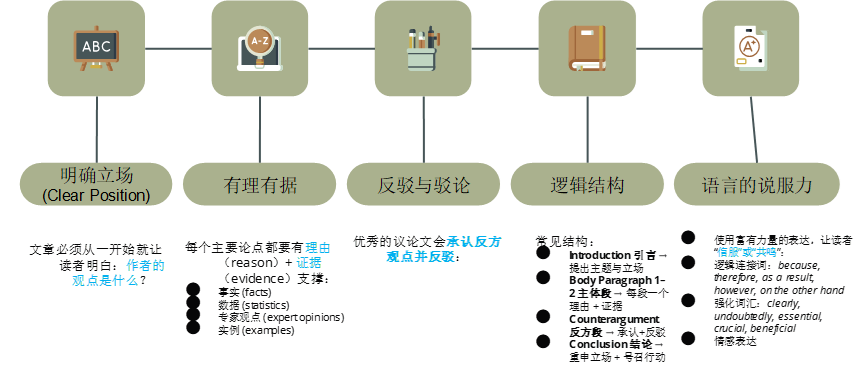
说服性写作的主要特点 (Key Features)
说服性写作的学习途径
Step-by-Step Persuasive Writing Pathway (分为4个阶段)
01Phrase 1: Foundations of Persuasion02Phrase 2: Persuasive Techniques03Phrase 3: Strengthening Arguments04Phrase 4: Capstone Persuasive Project
简而言之:有说服力的写作 = 清晰且可争论的主张 + 有力的证据 + 修辞策略,并以逻辑、情感和可信度呈现,同时预见反对意见并保持对受众的关注。
By the end of 4 phrases of learning, the student can produce a5–7 page persuasive essaywith credible evidence and a3–5 minute persuasive speech, and completed areflection portfolio.
*以上课程大纲仅供参考,会根据学员实际能力、学习目标和总体可投入的学习事件进行灵活调整。
一篇经典的说服性写作范文-你被他说服了吗?
Why Everyone Should Learn a Second Language
为什么每个人都要学习第二语言
In today’s global world, learning a second language is no longer a luxury — it’s a necessity. Whether you dream of traveling, studying abroad, or simply understanding the world better, speaking another language opens doors that would otherwise stay closed.First, learning a second language strengthens the brain. Studies show that bilingual people have better memory, problem-solving skills, and creativity. When you switch between two languages, your brain becomes more flexible, just like exercising a muscle. It’s not only about speaking — it’s about thinking in new ways.Second, knowing another language connects you with more people. Language is more than words; it’s a window into culture and emotion. When you learn Spanish, Chinese, or French, you also learn how people in other countries think, joke, and see the world. You can make friends across borders and understand global news firsthand instead of through translation.Third, learning a second language gives you more opportunities. In school, it can help you understand grammar and vocabulary better, even in your first language. In the workplace, it makes you more competitive. Companies value employees who can communicate with international clients and partners. A new language is like a key — it opens doors to new jobs, experiences, and friendships.Some people say that learning another language is too hard or unnecessary because translation tools exist. But no app can replace human connection. Speaking directly to someone in their own language shows respect and empathy — something no machine can do.In conclusion, learning a second language expands the mind, builds relationships, and creates opportunities. The world is full of voices — don’t let yourself understand only one. The more languages we learn, the closer we come to understanding one another.