

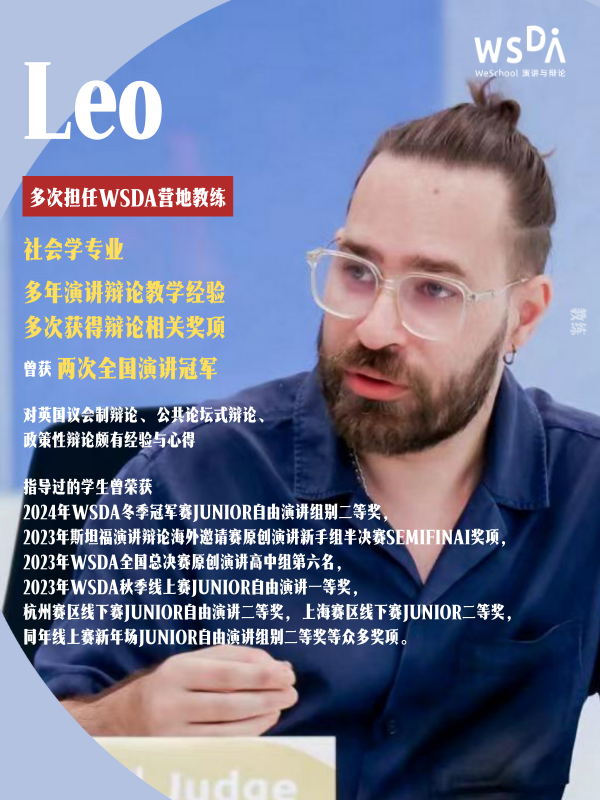
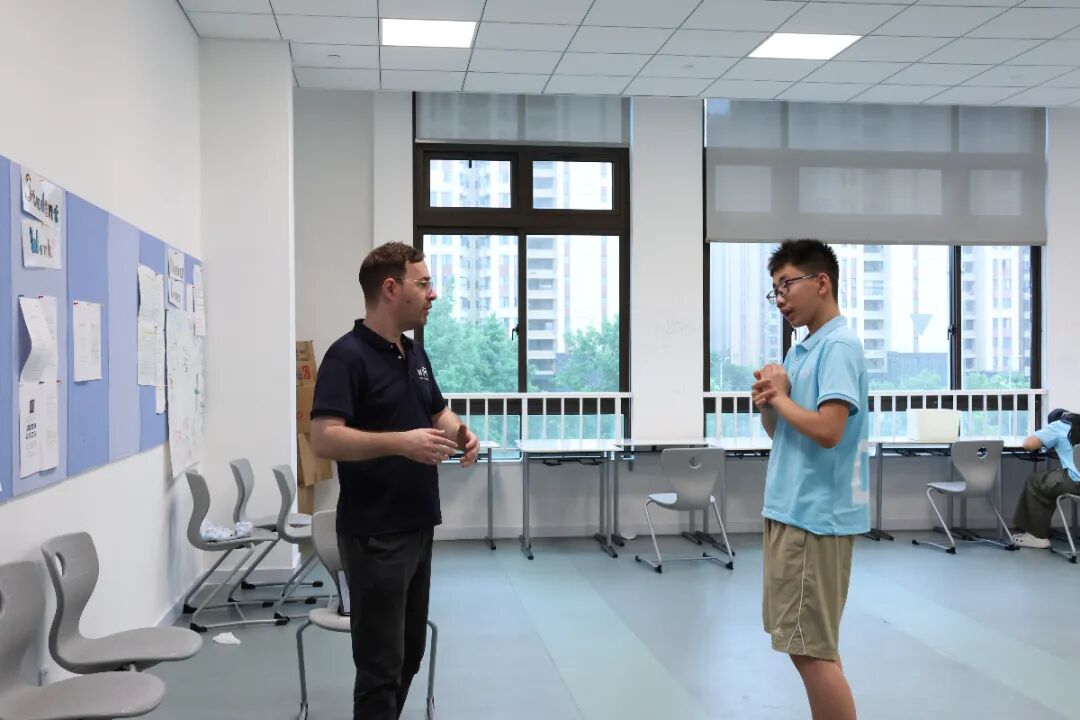
Leo教练还记得,那位英语并不算流利的男孩选择演绎《老人与海》,结果成了校内比赛里最大的黑马。“他的发音确实一般,但他能够理解老人的孤独和那股倔强。”Leo回忆说,“他边念台词边做出抛竿的动作时,我相信台下的观众都被带进故事里了。”
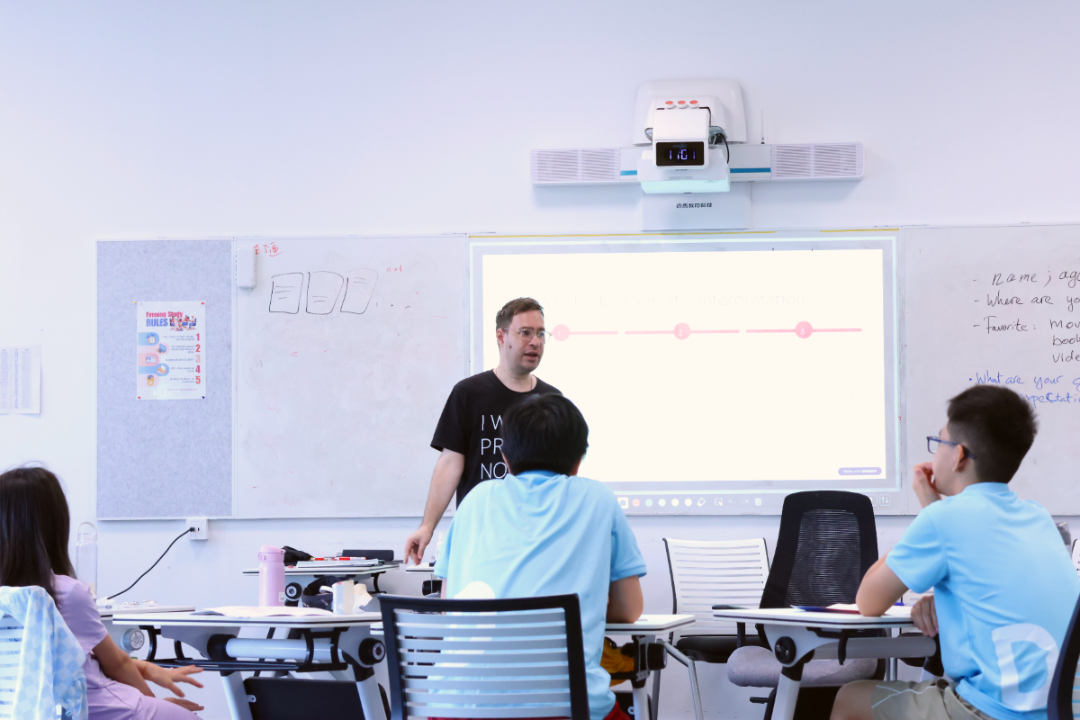
这是戏剧教育中无数个魔法时刻中的一个。多次担任WSDA综合学术营教练的Leo深信,戏剧和表演性演讲不只是关于表演,而是一场让孩子全方位成长的旅程。

“如果用一句话形容表演性演讲,我会说这是激动人心的沉浸式体验。”
Leo的声音里带着教育的热情,“它更像是一种全人教育——把创造性思维、批判性思维和表演能力融合在一起,最终创造出来的不仅是一个节目,更是一件艺术品。”
他特别喜欢用运动来比喻:“这就像教育的铁人三项。孩子们需要同时调动理解力、创造力和表现力,在打磨作品的过程中,他们不仅在塑造角色,更在塑造自己的品格。”
"If I had to describe dramatic interpretation in one sentence, I would say it's an exciting, immersive experience," Leo says with pedagogical passion. "It's more like holistic education—integrating creative thinking, critical thinking, and performance skills. What's created in the end isn't just a piece for show; it's a work of art."
He particularly likes using sports as an analogy: "It's like an educational triathlon. Children need to simultaneously engage their comprehension, creativity, and expressiveness. While refining their piece, they're not just shaping a character—they're shaping their own character."

在Leo看来,戏剧与表演性演讲带来的成长是立体而深刻的。
最基础的是深度阅读能力的培养。“孩子们要学会的不仅是读懂字面意思,更要读懂文字背后的人性。他们会开始思考:作者真正想说什么?这个故事为什么对我重要?”
更重要的是创造力的释放。“每个孩子对同一个角色都可以有不同的诠释,这种创作自由对他们是珍贵的礼物。”
而最让Leo感动的是勇气的培养。“与传统戏剧不同,表演性演讲要求孩子直接面对观众,与裁判进行眼神交流。当孩子学会在注视下依然自信地表达时,这种勇气会延伸到生活的每个角落。”
从“发生了什么”到“为什么重要”
"What Happened" to "Why It Matters"
多年的教学让Leo发现,孩子们最大的挑战往往不是技巧,而是思维方式的转变。
“大多数孩子刚开始都执着于情节——发生了什么、接着又发生了什么。但表演性演讲的精髓不在于讲述故事,而在于传递故事的意义。”Leo解释道,“帮助孩子找到那个让他们心动的核心信息,形成自己的解读,这个过程本身就是最好的教育。”
Years of teaching have shown Leo that children's biggest challenge is often not technique, but a shift in mindset.

"Most children initially fixate on the plot—what happened, what happened next. But the essence of dramatic interpretation isn't about narrating the story; it's about conveying the story's meaning," Leo explains. "Helping children find that core message that resonates with them, forming their own interpretation—this process in itself is the best education."
数字时代的人文坚守
Genuine Connection in a Digital Age
在AI能够瞬间生成故事的时代,为什么还要孩子去慢慢揣摩一个角色?
Leo的思考深刻而温暖:“如果我们只是教孩子从AI获取答案,而不是教会他们如何阅读、如何创造、如何表达,我们就剥夺了他们成为完整的人的权利。表演性演讲所培养的那些能力——批判性思维、创造力、共情力,正是人性最珍贵的部分。”
In an era where AI can generate stories instantly, why should children still slowly delve into a character?
Leo's reflection is profound and warm: "If we only teach children to get answers from AI, without teaching them how to read, create, and express, we rob them of the right to become whole persons. The abilities nurtured by dramatic interpretation—critical thinking, creativity, empathy—are precisely the most precious aspects of our humanity."

对于初次接触戏剧和表演性演讲的孩子,Leo的建议简单却充满智慧:“选你真正热爱的,而不是听起来高级的。如果你为莎士比亚头疼,就不要强迫自己。找到一个让你眼睛发亮的故事,你才会愿意为它反复打磨,在不断的练习中收获成长。”
那个演绎《老人与海》的男孩后来告诉Leo,他之所以选择这个故事,是因为他的爷爷也是个渔民:“我终于在舞台上说出了想对爷爷说的话。”
在Leo看来,这就是戏剧教育最美的部分——当孩子在故事中遇见角色,其实遇见了内心深处那个真实的自己。而教育,就是在这样的相遇中,温柔地改变一个孩子的生命轨迹。
For children new to dramatic interpretation, Leo's advice is simple yet wise: "Choose what you genuinely love, not what sounds sophisticated. If Shakespeare gives you a headache, don't force yourself. Find a story that makes your eyes light up. Only then will you be willing to refine it repeatedly and reap growth through continuous practice."
The boy who performedThe Old Man and the Sealater told Leo that he chose the story because his grandfather was also a fisherman: "I finally said on stage what I wanted to say to my grandfather."
In Leo's eyes, this is the most beautiful part of drama education—when children meet characters in stories, they are actually meeting their true inner selves. And education, in such encounters, gently alters the trajectory of a child's life.
在Leo教练看来,
戏剧教育不仅是技能的培养,
更是生命的滋养。
当孩子在故事中遇见角色,
在表演中发现自己,
他们正在成长为更完整、更深刻的人。


2026冬季冠军赛报名已开启
准备好迎接你的下一个高光时刻了吗?