

距离年度冠军赛开赛还有一个多月
相信大家已经摩拳擦掌,蓄势待发
今年是年度冠军赛
开设Junior WSD组别的第四年
去年比赛现场的精彩交锋仍历历在目
随着冠军赛PF辩题的公布
JWSD组别的Motion也已确认!
今天为大家正式公布
年度冠军赛 & 线上全国邀请赛
Junior WSD 已备辩题
帮助各位辩手早做准备、从容应赛!
期待大家在赛场上带来眼前一亮的视角!

Junior WSD暑期已备辩题
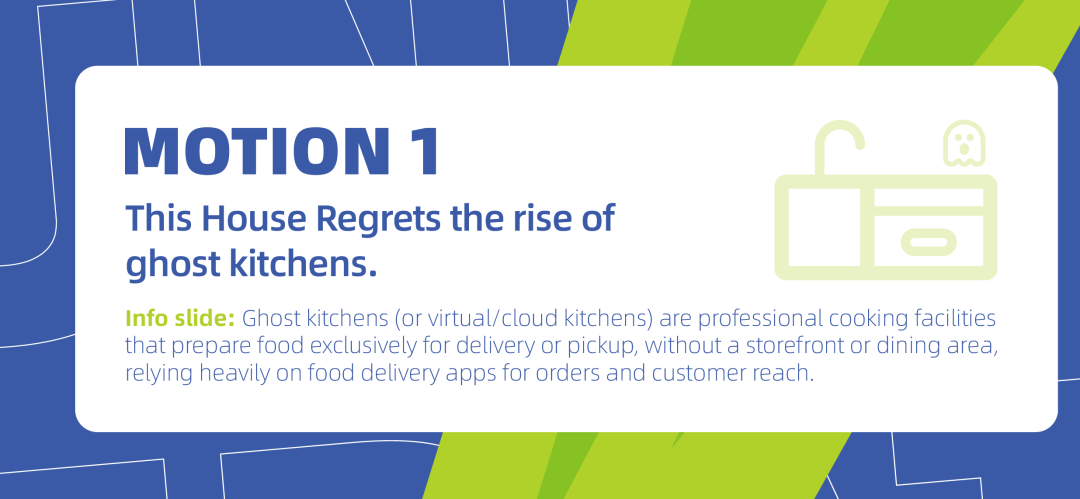
MOTION 1
This House Regrets the rise of ghost kitchens.
*Info Slide: Ghost kitchens (or virtual/cloud kitchens) are professional cooking facilities that prepare food exclusively for delivery or pickup, without a storefront or dining area, relying heavily on food delivery apps for orders and customer reach.
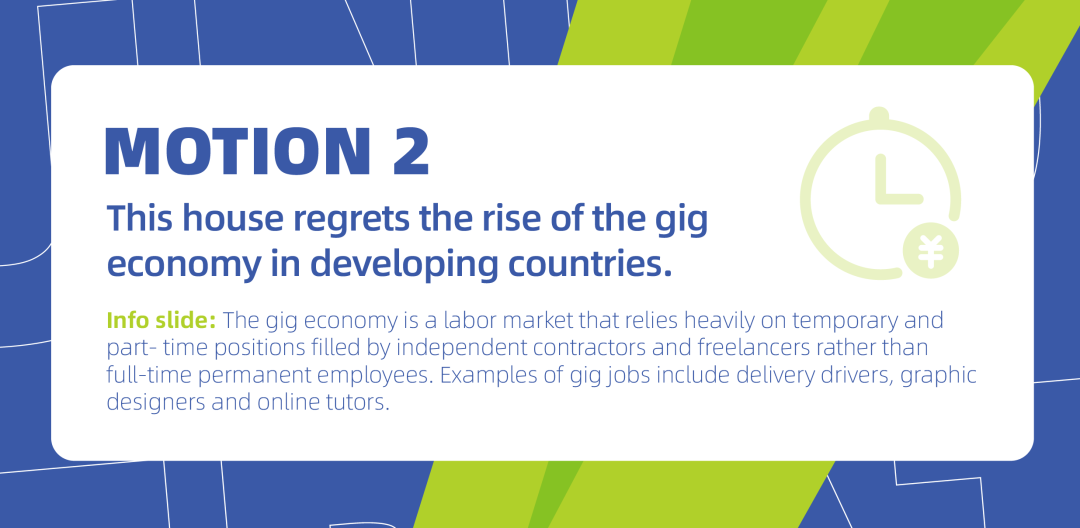
MOTION 2
This house regrets the rise of the gig economy in developing countries.
*Info Slide: The gig economy is a labor market that relies heavily on temporary and part- time positions filled by independent contractors and freelancers rather than full-time permanent employees. Examples of gig jobs include delivery drivers, graphic designers and online tutors.
暑期已备辩题适用比赛
· 2026年度冠军赛JWSD比赛 8月7-9日
· 2026线上全国邀请赛JWSD比赛 8月22-23日
比赛轮次安排及辩题发布计划
1. 2026年度冠军赛&线上全国邀请赛:循环赛阶段共设置5轮比赛,将采用2轮已备辩题+3轮即兴辩题形式展开;淘汰赛阶段将全部采用即兴辩题。
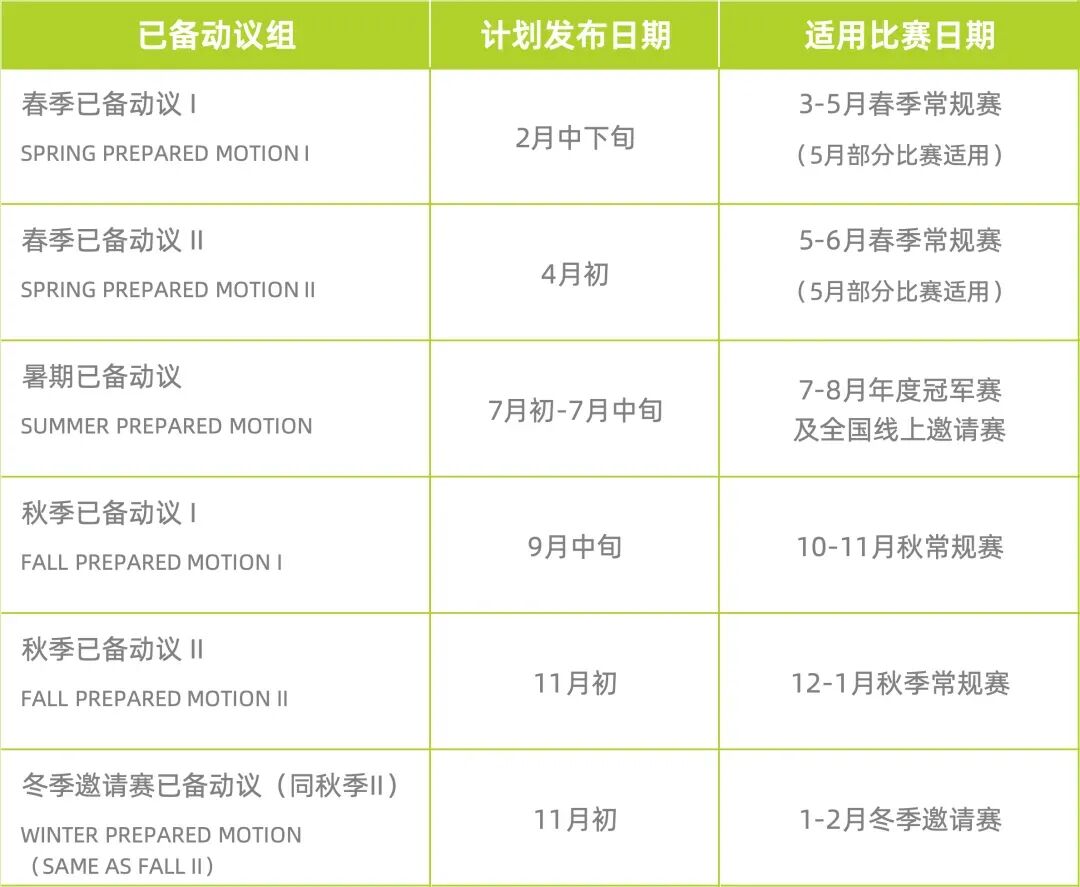
2. Junior WSD已备辩题全年发布计划如下:

全年共计5套已备辩题,其中每套辩题包含2个已备辩题:
Young Mind, Fresh Ideas
2026 Junior WSD 年度冠军赛
除了已备辩题的公布
本文也同步发出对应的辩题解析
希望能够帮助大家更好地备赛!
Proposition 正方
The framework can be that people's health is the most important thing, and food quality directly affects citizens' health. But ghost kitchens damage food quality and make regulation even more difficult. That's why we regret the rise of ghost kitchens.
First argument: Ghost kitchens harm food quality and public health.
Sub-point A:They lack supervision from the platform. The platforms are profit-driven and they try to attract as many restaurants as possible so they can serve diverse customers. That's why they don't scrutinize when they grant operating licenses on their platform. Some ghost kitchens even use fake photos and fake business licenses.
Sub-point B:ghost kitchen owners are profit-driven, they prioritize profit over quality. So they don't have the incentive to keep their food quality or maintain a high standard for staff hygiene and kitchen cleanliness. It is more likely for customers to eat unhealthy and dirty food in ghost kitchens compared with traditional restaurants. With the rise of ghost kitchens, public health is ruined.
Second argument: The rise of ghost kitchens will strengthen platform monopoly.
Big tech delivery apps like Meituan in China became the main way for customers to order food, especially after COVID-19. With platform monopoly, people tend to open ghost kitchens instead of real restaurants because real restaurants cost too much. The rise will eventually displace local restaurants.
Pre-emption of the Opposition side: The Opposition may say they can regulate ghost kitchens, but it's difficult.Regulation is costly and slow. Platforms are afraid of their opponent taking over their market share. So they want to recruit as many restaurants as quickly as possible. And if there’s food problem, customers will claim compensation from the restaurants, not the platform. So platforms keep lowering the threshold to include more restaurants, thus strict regulation is less likely to happen.
Opposition 反方
Clarification:Ghost kitchen doesn't mean dirty kitchen. There is incentive for restaurant owners to keep their food quality and keep the environment clean. Because they care a lot about their comments, reviews, and reputation, and they don't want to get fined or punished.
The framework can be that contribution to the economy is quite important. Cloud kitchens increase access for different customers and increase opportunities for small businesses to develop.
First argument:Cloud kitchens contribute to the economy because they create a lot of job opportunities and lower the threshold for opening a restaurant. Also, if you have an innovative idea, you don't need to attract a lot of investment to launch your project, you can open a cloud kitchen first, and then expand the business. With the rise of cloud kitchens, innovation would also be faster and people can taste diverse food.
We agree there are some loopholes, and we're already trying our best to regulate them. Platforms do take responsibilities otherwise the government would punish them. At the same time, we have different services like livestreams for people to see the real environments of the kitchens. Customers have 100% autonomy to choose what they eat.
Second argument:Cloud kitchens make food cheaper and improve access. Cloud kitchens lower the cost and price of food because they don't need to hire many staff or rent big spaces. Within the acceptable cost range where they can still make money, they'll try to lower the price as much as possible. This benefits customers because they can have diverse food options, especially in underserved areas. Some people choose cloud kitchens because they serve fast. When you order from a real restaurant, you wait for them to serve the dine-in customers who might have higher priority, and delivery takes a long time. The rise of ghost kitchens feeds the demand of busy citizens and workers in the fast-paced society.
Proposition 正方
The Proposition team should focus on the serious lack of protection for gig workers in developing countries.Formal full-time jobs with benefits are often hard to find. The gig economy fills this gap by shifting almost all risks onto workers. Delivery drivers and ride-hailing workers must use their own vehicles and pay for fuel, maintenance, and insurance. If they have an accident or get sick, they usually receive no pay or support from the platform. This is especially dangerous in developing countries where traffic is heavy, roads are poor, and medical care is expensive. Workers often feel they have no choice but to accept these conditions to support their families.
Income is also highly unpredictable.Algorithms decide tasks and pay, and these systems can change without warning. A worker might earn well one week and very little the next. This makes it almost impossible for families to plan ahead. Parents cannot reliably budget for children’s school fees, uniforms, or medical needs. When unexpected expenses arise, many families must borrow money or cut back on food and education. Over time, this instability traps families in a cycle of poverty. Children grow up watching their parents work long hours with little security, which affects their own hope for the future. The Proposition should explain that a fair society must provide basic protections so hardworking people can live with dignity. Regretting the rise of the gig economy means recognizing that customer convenience and platform profits have come at a high cost to the most vulnerable workers and their families. In addition, gig workers lack real bargaining power. They are classified as independent contractors, so they cannot easily negotiate better pay or conditions. If they complain, platforms can reduce their future work. This power imbalance is worse in developing countries where labor laws are weak. Many workers feel exhausted and stressed but continue because they see no better option. The Proposition connects this to fairness: when large companies profit while workers have no safety net, something important is lost. Young debaters should consider what kind of working world they want in the future.
Opposition 反方
The Opposition team should argue that the gig economy has created valuable opportunities and flexibility in developing countries where traditional jobs are limited. It allows people — especially women, students, and those in rural areas — to work when and how much they choose. A mother can tutor online after her children sleep. A student can deliver food between classes. A villager can provide delivery services in a nearby town. This flexibility helps families earn income while balancing childcare and other responsibilities. It is often life-changing for those with few other options.
Gig work also serves as a practical stepping stone. Workers gain skills in technology, time management, customer service, and basic business. Many use their earnings to save for small businesses, vocational training, or their children’s education. In countries where formal jobs are scarce, this self-directed work opens doors that would otherwise stay closed. The Opposition should emphasize that the gig economy has increased the number of economically active people. More earners mean more money circulating in local communities, which helps small businesses and improves living standards.
Traditional jobs in developing countries are not always better. They may offer fixed pay but often come with long hours, low wages, poor conditions, and little freedom. Gig work gives workers control over their schedules. They can work more when extra money is needed for school fees and rest when family needs arise. This autonomy is especially valuable for parents who want to stay involved in their children’s lives. Rather than regretting the gig economy, the Opposition can argue that society should improve it through sensible rules, such as basic accident insurance or clearer pay information. The rise itself shows people’s strong desire to find work and support their families in difficult economic environments. It has already helped millions of families build skills and gain a foothold in the modern economy. The Opposition presents a balanced view: we should not regret this development but work to make it fairer for workers and communities.