


观点类大作文,文化类话题
Many people think that the best way to learn a culture is to learn its language. To what extent do you agree or disagree?
题目来源:2025年8月30日大陆雅思大作文(重复2021年5月20日考题)
1、题目大意
许多人认为学习一种文化的最好方法就是学习它的语言。你是否同意?
2、思路解析
这是一道观点类大作文,聊的是文化和语言的问题。题目理解上不难。审题的时候要注意绝对词“the best way”,一般遇到观点中有绝对词的情况,持反对意见会更好写。下面,带大家来看下反对角度的具体观点。
一是语言学习存在局限性,并非所有文化元素都能通过语言直接理解。比如建筑、饮食、艺术或宗教习俗,很多都需要通过实际体验或系统研究才能深入领会,仅依靠语言会使理解流于片面。
二是亲身体验和融入当地社会往往比学习语言更直观。通过旅行、工作或长期生活,个人可以通过观察行为模式、参与社会活动,更自然地获取文化信息,即使语言水平有限,也能建立对文化的真实感受。
三是了解一门文化的深层结构还需要研究历史、政治、经济和宗教背景。这些内容往往超越语言范畴,需要查阅学术资料、参加讲座或与专家探讨,才能形成系统、全面的文化认知。
3、提纲
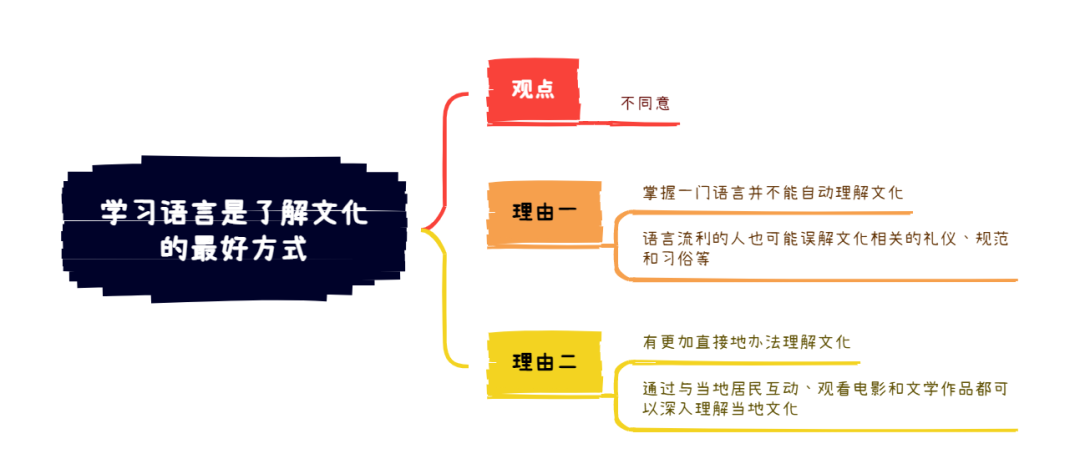
4、高分范文示例
In today’s increasingly interconnected world, understanding foreign cultures has become more important than ever. Many people claim that mastering another society’s language is the optimal avenue to gain insight into its way of life. However, I firmly disagree with the notion that learning a language alone is the best method to acquire a genuine understanding of a culture.
Firstly, acquiring a new language does not automatically impart deep cultural understanding. Language instruction typically emphasizes grammar and vocabulary rather than the underlying customs or values of a society; consequently, even a person who is linguistically fluent may misinterpret social etiquette or historical references. Moreover, culture encompasses history, traditions, and social norms — dimensions that require contextual knowledge beyond what vocabulary or grammar alone can convey. If learning a culture were as simple as learning its language, then any fluent speaker would be culturally adept, which is often not the case. Therefore, language proficiency by itself is insufficient for comprehensive cultural learning.
Secondly, there are more direct and effective ways to absorb a culture than through language study alone. Because culture is embodied in everyday traditions and practices, direct exposure to these elements yields insights that formal language lessons cannot provide. Interacting with local residents and observing their daily routines allows one to pick up on unspoken social rules and attitudes that would be missed when studying vocabulary in isolation. Additionally, thanks to global media and translation, individuals today can explore a society’s history, arts, and values through films, literature, and other media without speaking its language, further demonstrating that fluency is not a prerequisite for cultural insight. Thus, experiencing a society’s way of life firsthand is often more enlightening than merely studying its language.
In conclusion, while learning a language can facilitate one’s understanding of a foreign culture, it is by no means the sole or best path. True comprehension of another culture arises from a combination of linguistic knowledge and active engagement with that culture’s customs, values, and daily life.
5、相关词汇和语法结构
an increasingly interconnected world 日益互联的世界

gain insight into 深入洞察/了解
the optimal avenue 最佳途径
genuine understanding 真正的理解
I firmly disagree 我坚决不同意
does not automatically impart 并不会自动赋予
underlying customs and values 深层的习俗与价值观
social etiquette 社会礼仪
historical references 历史典故/指涉
encompass history, traditions, and social norms 包含历史、传统与社会规范
contextual knowledge 语境性/背景知识
comprehensive cultural learning 全面的文化学习
more direct and effective ways 更直接且更有效的方法
everyday traditions and practices 日常传统与实践
unspoken social rules 不成文的社会规则
vocabulary in isolation 脱离语境的词汇(学习)
thanks to global media and translation 得益于全球媒体与翻译
not a prerequisite for cultural insight 并非获得文化洞见的前提
experience something firsthand 第一手/亲身体验
active engagement with 对……的积极参与/投入