

WSC Weekly
2025世界学者杯
the World Scholar's Cup
@WSC小学者们!Jerry喊你来看
WSC Weekly专栏啦!
2025年度主题:重燃未来
Reigniting the Future
WSC Weekly专栏将精选最新话题内容
助力小学者准备世界学者杯!
让我们怀着
永恒的学术精神与信念
探索未来的无限可能吧!
锁定每周WSC Weekly
上期回顾&Quiz答案揭晓
在2025年世界学者杯第35期WSC Weekly栏目中,我们与小学者一起了解了诺基亚如何从巅峰跌落,又如何从消费电子品牌转型为支撑全球互联的电信基础设施巨头。在上期的趣味Quiz中,你是否找到了正确答案?现在就让我们一起来揭晓吧!
点击查看上期话题
曾经的手机之王诺基亚是如何没落的?
The Rise and Fall of Nokia
第35期Quiz答案揭晓:
What was the primary strategic error that led to Nokia's original decline?
导致诺基亚最初衰落的主要战略错误是什么?
A. They focused on constructing "indestructible" phones and increased construction cost. 专注于打造“坚不可摧”的手机,导致制造成本上升
B. They failed to transition effectively to the smartphone app ecosystem 未能有效转型至智能手机应用生态系统
C. They focused too much on 5G infrastructure too early. 过早过度聚焦5G基础设施建设
D. They transited to became a B2B technology company. 转型成为B2B技术公司
E. Their decision to sell phone division to Microsoft 将手机业务部门出售给微软的决策
正确答案:B
Key: B
2025年第36期
Weekly Intro
当生命的进度条走到终点,接下来究竟是直接“黑屏”,还是会开启一个隐藏的“新关卡”?这是迷信的幻象还是文明的智慧结晶?
本期Weekly将深入解析多种古代来世观,探讨其文化意义与历史影响,一起来看看吧!
2025 No.36
亡灵旅行指南:死后我们的灵魂会去哪里?
An Afterlife Travel Guide: Where Do Our Souls Go After Death?
人类对死亡终点的持续构想
想象一下,当生命的进度条走到终点,接下来究竟是直接“黑屏”,还是会开启一个隐藏的“新关卡”?对于这个问题,人类历史上最富有想象力的大脑们从未停止过构想。在人类历史的每一个时代,文明都未曾将死亡视为单纯的存在终结,而是选择以与描绘物质世界同样精细的方式来绘制未知的彼岸。不同时代和地区对于“死亡之后会发生什么?”这个问题的答案千变万化,呈现出令人眼花缭乱的宇宙观。这些答案不仅揭示了我们的祖先如何面对死亡,也揭示了他们如何理解生命的根本意义。
Imagine this: when life's progress bar reaches its endpoint, what comes next? A sudden blackout, or the unlocking of a hidden “new level”? Across every epoch of human history, civilizations have refused to accept death as a mere cessation of existence, instead choosing to map the unknown territory of the beyond with the same precision they applied to the physical world.From the frost-hardened warrior societies of Scandinavia to the bureaucratic empires of East Asia, the answer to the question "what happens next?" has varied wildly, offering a dazzling array of cosmologies that reveal not just how our ancestors prepared for death, but how they understood the fundamental purpose of life.
北欧维京勇士的英灵殿信仰
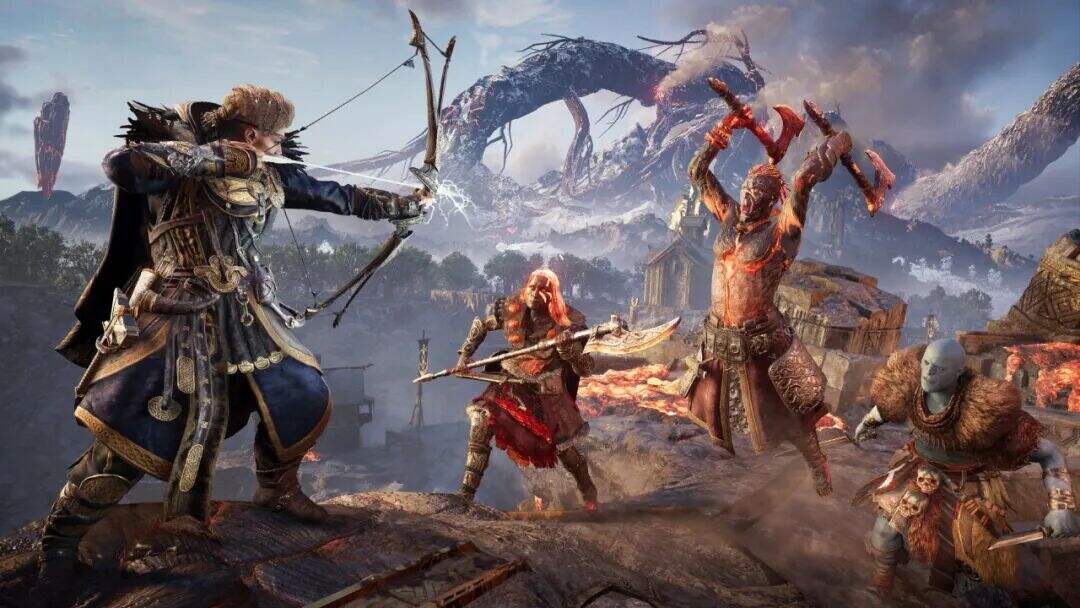
在维京时代的斯堪的纳维亚,最著名的来世归宿之一是英灵殿(Valhalla),这是一座由奥丁神统治的壮丽殿堂。根据保存在中世纪冰岛文献(如《诗体埃达》)中的北欧神话,英灵殿是金光闪闪的大厅,只有在战斗中英勇战死的战士才能抵达。这些战士被称为“英灵”(Einherjar)。传说中,被称为女武神的神圣的女护卫会从战死沙场的勇士中挑选战士,并将他们从战场带走。在英灵殿中,战士们每天相互搏斗,为被称为诸神的黄昏(Ragnarök)的最终的宇宙大战做准备。尽管他们每天都会在战斗中“死亡”,但每到傍晚,他们都会被神力复原,与其他英灵一起享用烤野猪肉和蜂蜜酒。这种设想中的来世,反映了维京社会的核心价值观:战斗中的勇气、对战友的忠诚,以及对“即使死后仍要为宇宙之战而奋斗”的信念。
In Viking Age Scandinavia, one of the most famous afterlife destinations was Valhalla, a majestic hall ruled by the god Odin. Norse mythology—preserved in medieval Icelandic texts like the Poetic Edda—described Valhalla as a golden hall where only the bravest warriors arrived after dying in battle. These warriors, known as Einherjar, were chosen by the Valkyries, divine shield-maidens who carried slain fighters from the battlefield. In Valhalla, warriors spent each day fighting one another in preparation for Ragnarök, the final cosmic battle. Though they died in these daily battles, they were magically restored each evening to feast on roasted boar and drink mead.This imagined afterlife reflected Viking social values: courage in battle, loyalty to one’s comrades, and the belief that even death could not end a warrior’s contribution to the cosmic struggle.

古希腊冥界的永恒惩罚
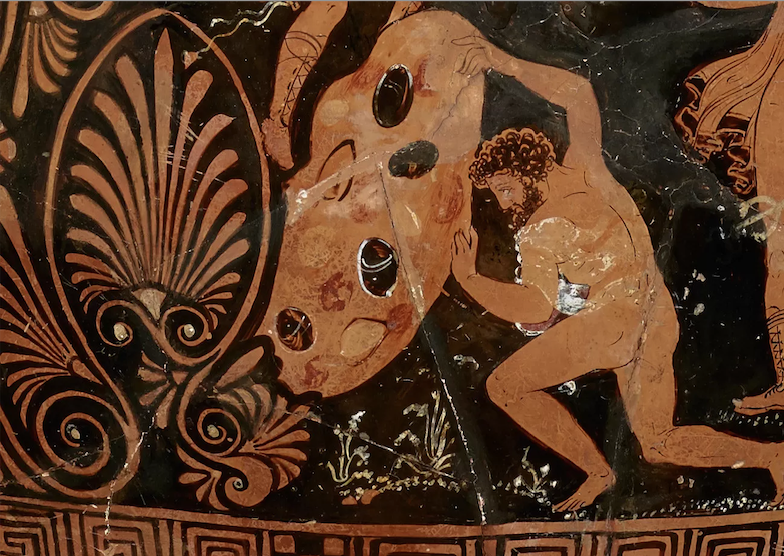
古希腊文明(约公元前 800-146 年)对来世也有着丰富的想象,但画风截然不同。希腊神话将冥界描述为一个由宙斯的兄弟哈迪斯统治的多层领域。其中最黑暗、最令人恐惧的区域是塔耳塔洛斯(Tartarus),这是一个原本用来囚禁被击败的强大神祇(泰坦神)的深渊。后来,这里成为了犯下重罪的人类灵魂的最终归宿。据记载,古代诗人(尤其是荷马和赫西奥德)将塔耳塔洛斯描述得深不可测:如果从天上扔下一个铁砧,需要九天九夜才能落到那里。许多著名的神话人物都在此受刑:西西弗斯(Sisyphu)被判永恒地将巨石推上山顶,但这块石头每次都会滚落;坦塔洛斯(Danaides)永远饥渴交加,但食物和水总是在他触手可及之处溜走;达那伊得斯五十姐妹( Danaides)则必须永远试图填满漏水的罐子。这些惩罚象征着希腊人的信念:做坏事不仅会带来痛苦,还会导致无休止且毫无意义的徒劳。这反映了希腊道德观中对节制、自控和敬畏神明的重视。
In the civilization of ancient Greece (c. 800–146 BCE), the afterlife was also richly imagined, though in very different terms. Greek mythology described the underworld as a multi-layered realm ruled by Hades, brother of Zeus. The darkest and most feared region of this realm was Tartarus, a deep abyss originally used as a prison for powerful defeated gods known as the Titans. Later, Tartarus became the final destination for human souls who committed severe crimes. According to the document, ancient poets—especially Homer and Hesiod—described Tartarus as so deep that an anvil dropped from the heavens would fall for nine days before landing there. Many famous mythological figures were punished in Tartarus. Sisyphus, for example, was condemned to push a boulder up a hill for eternity, only for it to roll down each time. Tantalus stood eternally hungry and thirsty, with food and water always just out of reach. The Danaides, 50 mythical sisters, had to fill leaking jars forever.These punishments symbolized the Greek belief that wrongdoing leads not only to suffering but to endless, meaningless effort—a reflection of the Greek moral emphasis on moderation, self-control, and respect for the gods.
东亚官僚式的十殿阎罗
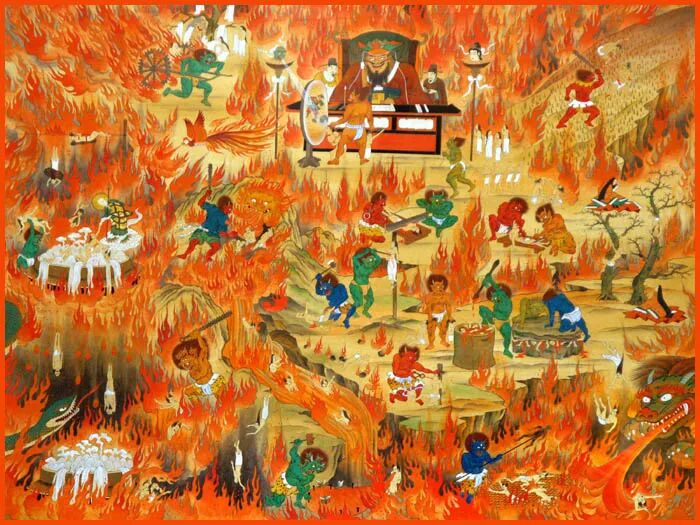
在东亚,尤其是中国和日本,来世被发展为一个复杂的道德体系,受佛教、道教和地方传统的共同影响。在中国信仰中,这一体系被称为“地狱”(Diyu),它运作方式仿佛一个庞大的官僚体系。地狱由十殿组成,每一殿由一位称作“阎王”的法官主审(这一形象源于佛教中的阎摩,死亡之王)。灵魂需要依次通过这些审判之庭,生前的行为会被详细审查。据传统说法,每一项恶行,无论是说谎、偷窃、诽谤,还是残忍屠杀牲畜,都有对应的惩罚,例如被冻在冰中,或被迫赤脚走过炽热的煤炭。完成惩罚后,灵魂会喝下“孟婆汤”,遗忘前世,然后转世为新的生命。在日本,有一个类似的地狱概念,称为Jigoku。它受到中国地狱体系和佛教教义的影响,但也发展出独特的艺术与宗教想象。日本的艺术与文学将地狱描绘为一个被“鬼”(Oni)守卫的炽热地下世界。与中国的地狱相似,Jigoku也强调道德审判,并反映出历史上东亚社会的严格社会秩序。
In East Asia, particularly in China and Japan, the afterlife developed into a complex moral system influenced by Buddhism, Taoism, and local traditions.In Chinese belief, this system is called Diyu, an underworld that functioned like a vast bureaucracy.Diyu contained ten courts, each ruled by a judge known as a King of Hell (borrowed from the Buddhist figure Yama, the lord of death). Souls passed through these courts, where their actions during life were examined. According to tradition, each wrong action—lying, stealing, slander, cruelty—had a corresponding punishment, such as being frozen in ice or forced to walk over burning coals. After completing their punishments, souls drank the soup of forgetfulness and were reincarnated into a new life. In Japan, a similar concept exists under the name Jigoku. While influenced by Chinese Diyu and Buddhist teachings, Jigoku developed distinct imagery. Japanese art and literature depicted Jigoku as a fiery underground world guarded by demons known as oni. Like Diyu, Jigoku emphasized moral judgment and reflected the strict social order of historical East Asian societies.
南亚业力主导的轮回哲学
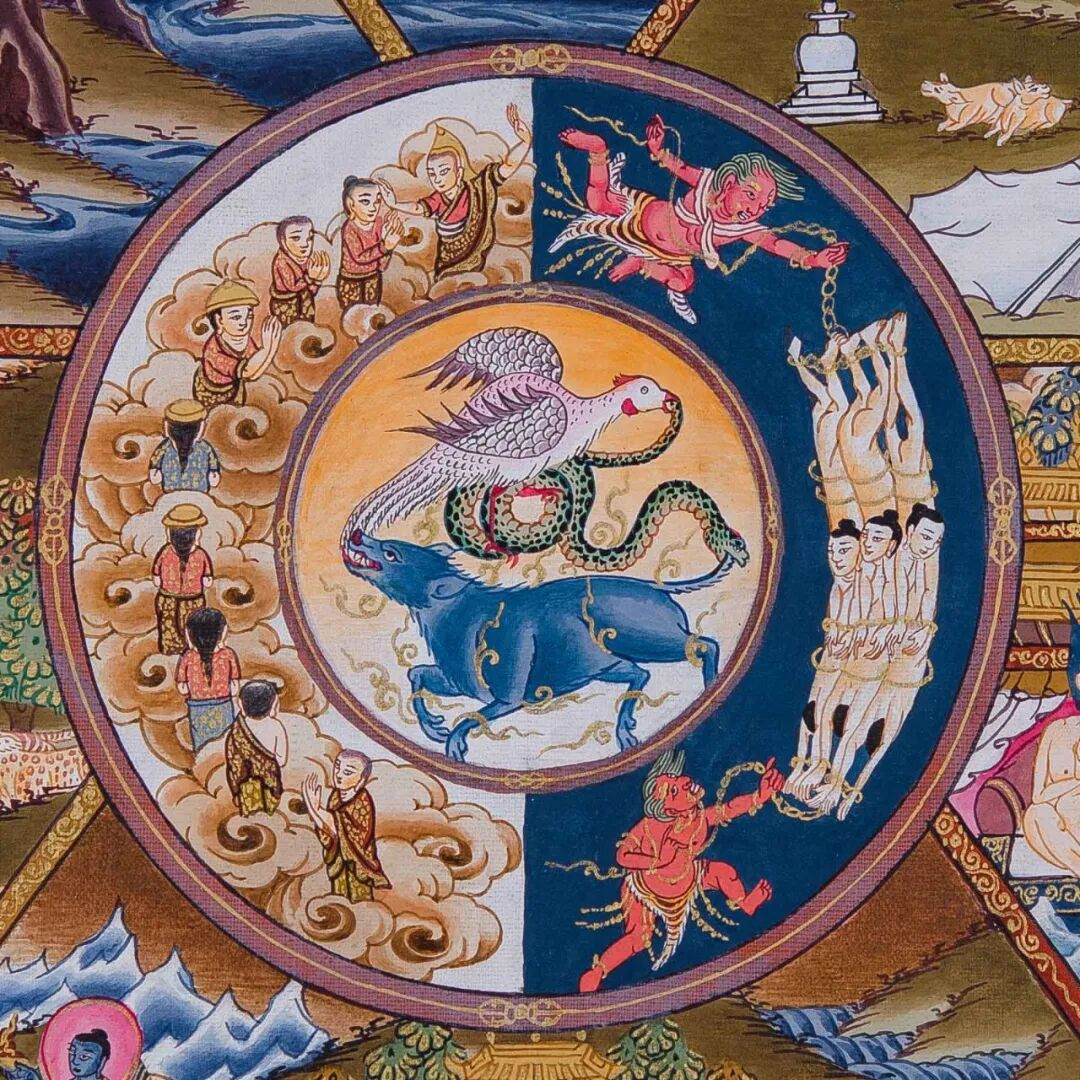
在南亚,印度教、佛教和耆那教等宗教提供了一种哲学性的来世观,核心是“轮回”(Samsara),即生、死与再生的无尽循环。与设想死后归于某一固定场所的文化不同,这些传统认为所有生命都不断在多次生命中轮回,每次投生由被称为“业力”(Karma)的行为的道德因果关系决定。善行带来较好的转世;恶行则导致更为艰难的生命状态。最终目标不是某一地点,而是一种名为“涅槃”(Nirvana)的解脱之境。在佛教中,涅槃是通过熄灭“贪、嗔、痴”三毒并觉悟真实本性而达成的。与“天堂”不同,涅槃并非一个愉悦的空间,而是彻底摆脱痛苦与幻觉的状态。这些宗教传统强调自我修行、冥想、伦理生活,并致力于终止苦难的轮回。这一世界观鼓励个体对自己的精神成长在多个生命中承担起责任。
In South Asia, religions such as Hinduism, Buddhism, and Jainism offered a philosophical vision of life after death centered on samsara, the endless cycle of birth, death, and rebirth.Unlike cultures that imagined a single destination after death, these traditions taught that all beings move through many lifetimes, with each rebirth shaped by karma—the moral consequences of one’s actions. Good deeds lead to better rebirths; harmful actions lead to more difficult lives. The ultimate goal was not a place, but a state of liberation called Nirvana. In Buddhism, Nirvana is achieved when a person extinguishes the “three poisons”—greed, hatred, and ignorance—and awakens to the true nature of reality. Instead of imagining paradise, these traditions focused on self-improvement, meditation, ethical living, and breaking free from the constant cycle of suffering. This worldview encouraged individuals to take responsibility for their spiritual development across many lifetimes.
北美原住民的星空之旅
在北美,许多原住民文化将来世设想为穿越天空的精神旅程,而不是奖赏或惩罚的场所。例如,大平原上的拉科塔人相信,死后灵魂会踏上“灵魂之路”(Spirit Trail),他们将其与银河联系起来。在踏上星空之旅前,灵魂需接受一位天界守卫的考验,尤其是审查其是否恪守亲族责任,唯有合格者方可与祖先团聚于星辰之间。易洛魁联盟(Haudenosaunee)则认为死亡是返回“天空之国”(Sky World),这一来世观与其创世神话紧密相关,他们认为人类的起源是源自一位从天空坠落的女性。切罗基人描述了“夜之国”(Nightland),这是西方的黑暗领域,灵魂将于其中游荡,直到未竟之事,特别是关于复仇或正义的责任,被履行完毕。星空不仅是物理空间,更是连接生者与祖先灵魂的宇宙地图的一部分。但这些信仰常常被殖民文学中简化的术语“幸福狩猎之地”(Happy Hunting Ground)所掩盖。这个说法主要是由像詹姆斯·费尼莫尔·库珀(James Fenimore Cooper)这样的白人作家虚构出来的,忽视了北美原住民信仰的真实复杂性。
Many Indigenous cultures of North America imagined the afterlife as a spiritual journey across the sky rather than a place of punishment or reward.For example, the Lakota people of the Great Plains believed that after death, a soul traveled along the Spirit Trail, which they identified with the Milky Way. A celestial guardian tested whether the soul had lived rightly—especially whether it had respected kinship obligations—before allowing it to join ancestors among the stars. The Haudenosaunee (Iroquois Confederacy) envisioned a return to the Sky World, linking the afterlife with their origin story in which humanity descended from a woman who fell from the sky. The Cherokee described the Nightland, a western realm where souls roamed in darkness until unresolved duties—especially acts of vengeance or justice—were settled. The sky was not just a physical space but part of a cosmic map linking the living with the spirits of their ancestors. These beliefs are often overshadowed by the simplified and colonial literary term "happy hunting ground". This phrase was largely fabricated by white writers like James Fenimore Cooper and ignores the complex reality of indigenous beliefs.
Weekly关键词 Key Words
Valhalla 英灵殿
Tartarus 塔耳塔洛斯
Diyu 地狱
Jigoku 地狱(日本文化)
Nirvana 涅槃
Samsara 轮回
Happy Hunting Ground 幸福狩猎之地
所属话题
Reliving It Up
相关阅读
https://en.wikipedia.org/wiki/Tartarus
https://en.wikipedia.org/wiki/Valhalla
https://matthewmeyer.net/blog/2014/03/02/jigoku-japanese-hell/
https://www.lionsroar.com/buddhism/wheel-of-life-bhavacakra/
https://www.straightdope.com/21343233/did-native-americans-really-believe-in-the-happy-hunting-grounds
Weekly FUN Quiz
相信现在你已经知道了古人是如何利用不同的来世观来理解生死的意义了吧!那就快来参与本期Weekly FUN Quiz👇,告诉老师你的答案吧!
Quiz
Which of the afterlife worlds is LEAST friendly to vegetarians?
以下哪个死后世界对素食主义者最不友好?
A. Valhalla 英灵殿
B. Tartarus 塔耳塔洛斯
C. Diyu 地狱
D. Nirvana 涅槃
E. Happy Hunting Ground 幸福狩猎之地
To WSC Scholars:
本期Weekly Quiz正确答案将在专栏下期推文中揭晓!欢迎小学者们关注服务号,进入“WSC Weekly”专栏,此栏目将会持续陪伴小学者们,分享更多WSC趣味学术知识!