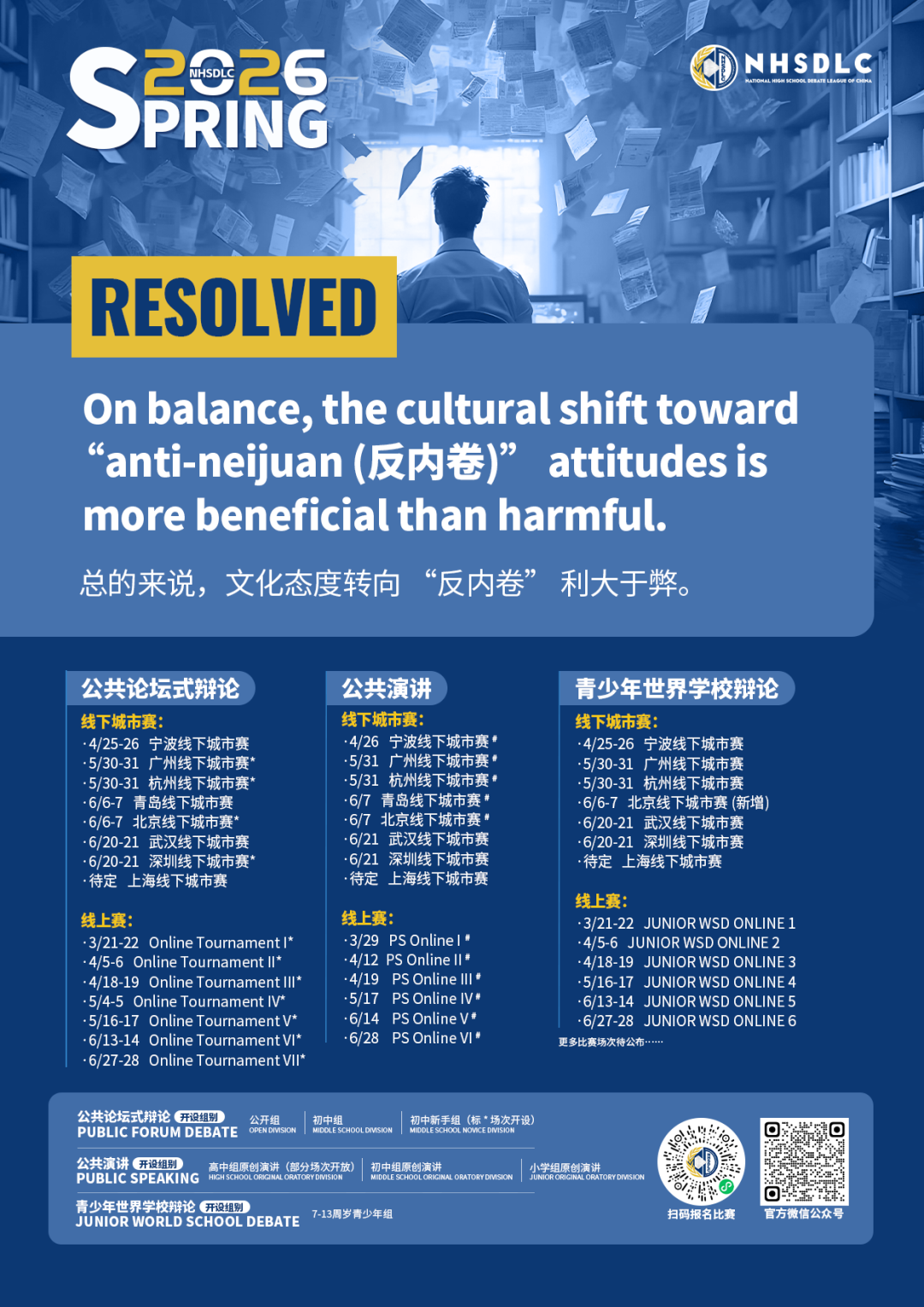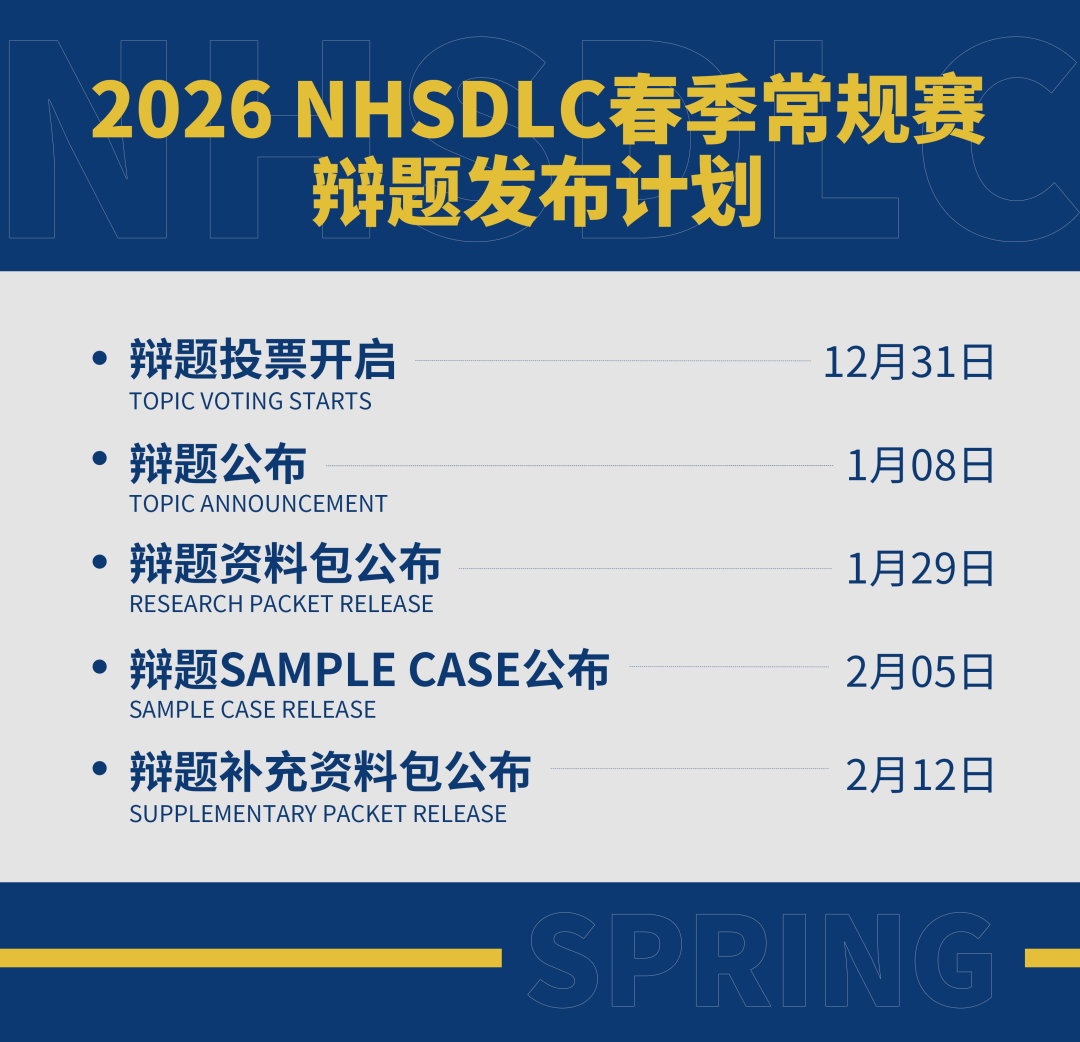


春季PF学术资料包已经发布多时
在大家忙着备赛的同时
Sample Case也已经新鲜出炉啦
本次辩题正反双方可以从哪些角度入手拆解呢?
让我们赶紧来看看吧!
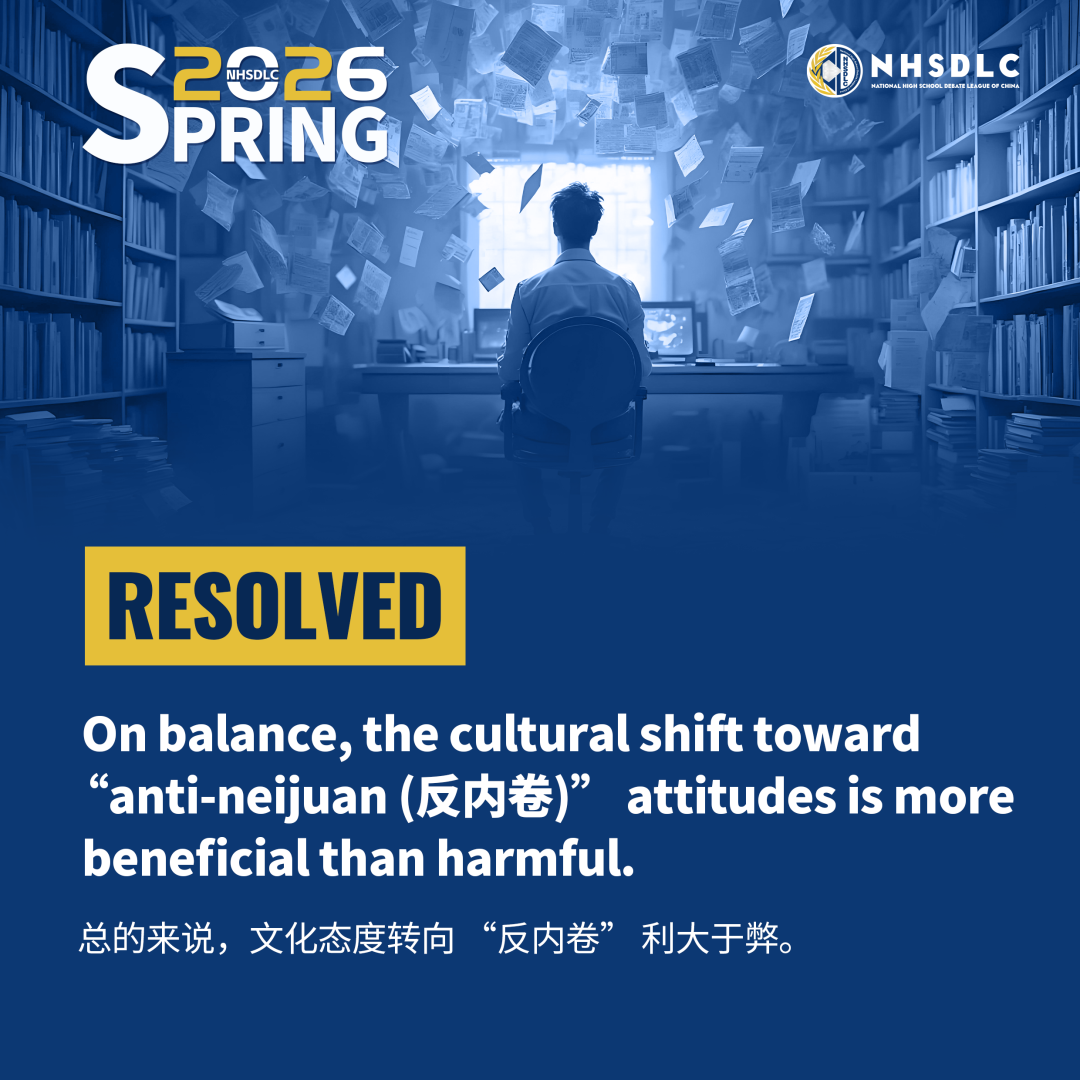
Sample Case
PRO
Neijuan (内卷), or involution, refers to a cycle of excessive, zero-sum competition where individuals or sectors pour in more effort but achieve diminishing returns—no real progress, just exhaustion and stagnation.
The shift is "cultural" as it spreads through social media, youth movements, and policy nudges like education reforms. "On balance" means we weigh net impacts across society.
Contention 1 -Benefits in Education
Anti-neijuan attitudes transform China's high-stakes education system from a burnout machine into a nurturing ground for creativity, equity, and personal well-being.
Subpoint A:Reduces Pressure and Inequality.
The Gaokao-driven neijuan forces millions into rote memorization and tutoring marathons, widening rural-urban gaps—over 70% of urban kids reach college vs. under 5% rural. But anti-neijuan, via policies like the 2021 "double reduction" (shuangjian, 双减), slashes homework and bans profit-driven tutoring, easing the load. This shift has cut agency numbers by 80%, freeing kids for sleep and play—surveys show middle schoolers now average 8+ hours of rest, boosting mental adaptation and alleviating teen depression rates, which are 57% and tied to exams. Similarly, in Korea's Suneung system, anti-involution reforms have reduced suicide risks linked to 46.5% academic depression.
Anti-neijuan policies ensure fairer educational access by removing costly tutoring barriers, allowing rural and low-income students to compete equally and closing the 70% urban vs. under 5% rural college gap (Borgen Project, 2020). This diminishes class stratification by ending wealth-based advantages, promoting social mobility and meritocracy across society. Moreover, reforms build personal resilience against burnout via better sleep and lower stress, cutting teen depression and suicide risks for healthier individuals (PubMed Central, 2025; PMC, 2024).
Subpoint B:Promotes Innovation and Holistic Growth.
Neijuan stifles creativity with exam fetishism, but anti-neijuan pivots to "quality education, emphasizing soft skills. Postgraduate pursuits abroad, fueled by anti-neijuan mindsets, build confidence and networks—80% of youth see it enhancing competitiveness and personal growth, fostering autonomy over status-chasing. This breaks homogeneity, where everyone chases finance jobs, fostering diverse talents for a modern economy while rejecting exhaustion for self-fulfillment.
Anti-neijuan shifts empower China's youth to innovate rather than just compete by emphasizing holistic skills like creativity, teamwork, and practical application, breaking the cycle of rote exam focus and driving technological and economic advancements (ScienceDirect, 2009; BU Wheelock, 2024). This yields net benefits over harmful stagnation by fostering diverse career paths in a modern economy, reducing overcompetition in uniform fields like finance, and promoting comprehensive personal development.
Contention 2 -Benefits in Economy
In the economy, anti-neijuan curbs destructive overcompetition, especially in EVs, channeling efforts into sustainable innovation and worker well-being.
Subpoint A:Ends Price Wars and Overcapacity. China's EV boom exemplifies neijuan: 100+ makers flood the market with subsidies, slashing prices 5.8% yearly and dropping margins to 3.9%. This rat race, while exporting 87% more vehicles, creates unusable surpluses, fueling deflation since 2020.
Anti-neijuan policies, such as 2025's pricing law amendments and capacity cuts, aim to stabilize the market by curbing "disorderly" schemes, boosting demand through stimulus, and reducing worker burnout from relentless shifts. In EVs, this redirects to high-tech like solid-state batteries, preserving global edge while alleviating anxiety from job instability. Such shift foster healthier industries by terminating unsustainable price wars and overcapacity, where utilization rates fell below 70% in 2025, enabling profitable consolidation among 129+ EV brands and efficient resource reallocation to avoid wasteful surpluses exceeding demand by millions annually.

This minimizes economic waste through high-tech pivots like solid-state batteries and stimulus-boosted demand, stabilizing growth amid 11.7% price drops and preventing deflationary spirals since 2023 (J.P. Morgan, 2023; The Guardian, 2025). On a personal level, it delivers relief from economic precarity by easing worker burnout from grueling shifts, bolstering job stability in a sector risking up to 50 brand collapses by 2026, and alleviating anxiety from volatile employment in overcompetitive markets.
Reference:
- Borgen Project (2020), What You Need to Know About China’s Rural-Urban Education Gap, fromhttps://borgenproject.org/what-you-need-to-know-about-chinas-rural-urban-education-gap
- PubMed Central (2025), Sleep patterns among middle school students: a three-year longitudinal study in the context of China’s “Double Reduction” policy, fromhttps://pmc.ncbi.nlm.nih.gov/articles/PMC12605037
- China Daily (2022,Policies keep students rested), fromhttps://www.chinadaily.com.cn/a/202210/06/WS633e0d98a310fd2b29e7b10e_2.html
- Frontiers (2025) Prevalence of depressive symptoms and knowledge, attitude, and practice among adolescents in Chengdu, China: a cross-sectional study, fromhttps://www.frontiersin.org/journals/psychiatry/articles/10.3389/fpsyt.2025.1607695/full
- Medicine Journal (2024) Prevalence and relevant factors of depression among adolescents in Xinjiang, China: A cross-sectional survey,fromhttps://journals.lww.com/md-journal/fulltext/2024/02160/prevalence_and_relevant_factors_of_depression.27.aspx
- Mental H2O (2024) Academic Pressure and Youth Mental Health in South Korea, fromhttps://mentalh2o.org/trigger-warning-suicide-and-self-harm-academic-pressure-and-youth-mental-health-in-south-korea
- ResearchGate,Encuentro con Meister Eckhart en el siglo XXI (2023), from:https://www.researchgate.net/publication/372848920_The_Impact_of_the_Double_Reduction_Policy_on_the_Educational_Equity_in_China]
- Sage Journal Hybrid Opportunities and Constraints: Chinese Top-Tier Overseas Postgraduate Students and Their Choices to Stay Abroad or Return Home, fromhttps://journals.sagepub.com/doi/10.1163/22125868-12340126 (and related entries on youth abroad studies)
- MDPI (2019): Net Zero Buildings—A Framework for an Integrated Policy in Chile, fromhttps://www.mdpi.com/2071-1050/11/5/1494
- Nature, College major decision making behavior of urban and rural students under cultural capital impact in China, fromhttps://www.nature.com/articles/s41598-024-80664-z
- SolarTech (2025), Chinese Electric EV Cars Market 2025: Comprehensive Analysis and Growth Forecast, from:https://solartechonline.com/blog/chinese-electric-ev-cars-market-analysis-2025
- CarNewsChina (2025), Profit margin of China’s auto industry was 4.4%, 2,000 USD per vehicle, second lowest in history, Jan to Nov 2025, from:https://carnewschina.com/2025/12/27/profit-margin-of-chinas-auto-industry-was-4-4-2000-usd-per-vehicle-second-lowest-in-history-jan-to-nov-2025
- InsideEVs (2025), Chinese EV Exports Are Soaring, With Big Gains In Mexico And Europe, from:https://insideevs.com/news/783051/chinese-ev-export-numbers-2025
- J.P. Morgan (2023), Deflation in China: The spillover effects for global markets, from:https://www.jpmorgan.com/insights/global-research/international/china-deflation
- The Guardian (2025), China warns EV makers to stop price-cutting to protect the economy, from:https://www.theguardian.com/business/2025/aug/05/china-warns-ev-makers-stop-price-cutting-production-involution
- China EV market shifts to high-tech focus in 2026 as price floor ends subsidy wars, from:https://www.evinfrastructurenews.com/ev-technology/china-ev-market-high-tech-focus-2026-price-floor-ends-subsidy-wars
- Brookings Unleashing “new quality productive forces”, from:China’s strategy for technology-led growth: https://www.brookings.edu/articles/unleashing-new-quality-productive-forces-chinas-strategy-for-technology-led-growth
Sample Case
CON
We negate.While anti-neijuan might sound like a healthy antidote to the culture of burnout, a broader cultural shift against competition has serious negative effects in the long term. If we stop pushing ourselves too hard, we risk becoming a culture of lower productivity, lower innovation, and fewer opportunities for upward mobility.
Our framework inthis debate is long-term social welfare. The cultural norm that best promotes a culture of economic growth, innovation, and upward mobility should be preferred. If anti-neijuan undermines this culture, then the resolution fails.
Contention 1 -Anti-neijuan weakens productivity and economic growth
Economic growth requires more than technology; it requires effort and labor participation. A cultural change that promotes disengagement directly challenges this premise.
As reported by the OECD, the growth of productivity in developed countries has already slowed down substantially over the last decade, and reduced work intensity and engagement are considered major factors in this deceleration (OECD, Productivity Policy Paper, 2023). A culture that deems effort undesirable, rather than situationally excessive, directly contributes to this problem.
This is particularly problematic in aging societies. As reported in the World Bank’s World Development Report in 2023, countries with declining populations must increase productivity per capita to support their standard of living (World Development Report, 2023). Anti-neijuan sentiment directly contradicts this by promoting a lack of effort, skill development, and competition.
Impact:A lower productivity level means that the GDP growth rate will be affected, and the government’s finances will also be impacted, making it difficult for the government to provide funding for health care, education, and social services. This has negative impacts on the population as a whole and will affect generations to come, outweighing individual-level stress reduction.
Contention 2 -Anti-neijuan undermines meritocracy and upward mobility
While uncomfortable, competitive effort is a major mechanism for social mobility, especially for those who are not from elite backgrounds. When hard work is not culturally valued, those with social capital are at a relative advantage. According to economist Raj Chetty, who has done extensive research at Harvard’s Equality of Opportunity Project, effort-based social mobility, such as education, hard work, and skill acquisition, is one of the strongest predictors of social mobility for those in lower- and middle-income backgrounds. However, when a culture does not value ambition, it does not value effort, which is precisely how disadvantaged groups are able to move forward.
Furthermore, according to the World Economic Forum future jobs report in 2023, high-performance cultures are a requirement for competitiveness in a global market. However, by not valuing high-performance cultures, we are not creating a more equitable society. We are creating a society that entrenches inequality, as those in elite positions are not affected.
Impact:Anti-neijuan also runs the risk of creating a two-tiered society: those who can opt out and those who cannot. This undermines social mobility and increases inequality, which goes against the entire purpose of the movement.
Contention 3 -Anti-neijuan does not reliably improve mental health and may worsen anxiety
Proponents believe that anti-neijuan contributes to a sense of well-being by reducing stress. However, research shows that reduced effort norms do not lead to improved mental health outcomes.
The American Psychological Association found that "the primary causes of job stress are job insecurity, lack of control, and lack of clear expectations, rather than effort itself." (APA, Work and Well-Being Survey, 2022). When organizations and societies promote "work less," the stress remains invisible rather than alleviated.
This has been evidenced in several different economies. According to a Havard Business Review article from 2018 "companies that have adopted anti-overwork policies have continued to have the same performance expectations, so employees have been working unofficially after hours to keep up."
Impact:In reality Anti-neijuan tries to address a real problem by applying the wrong solution, by weakening effort, hurting meritocratic advancement, and failing to reliably improve people’s mental health, this cultural shift creates deeper long-term harms and that is why we are proud to negate.
Reference:
- https://www.oecd.org/content/dam/oecd/en/publications/reports/2024/10/reviving-productivity-growth_936a1da3/61244acd-en.pdf&ved=2ahUKEwjNiMf2wr6SAxXCsVYBHXgfG2EQFnoECCAQAQ&usg=AOvVaw33qGyuyjvEFKRGBiBlqZUf
- MIGRANTS, REFUGEES, SOCIETIES, fromhttps://www.worldbank.org/en/publication/wdr2023
- Mobility Report Cards: Income Segregation and Intergenerational Mobility Across Colleges in the United States, from:https://opportunityinsights.org/paper/undermatching/
- The Future of Jobs Report 2023, from:https://www.weforum.org/publications/the-future-of-jobs-report-2023/
- Workers appreciate and seek mental health support in the workplace, from:https://www.apa.org/pubs/reports/work-well-being/2022-mental-health-support
- The Flexibility Paradox, from:https://policy.bristoluniversitypress.co.uk/the-flexibility-paradox
- If You’re So Successful, Why Are You Still Working 70 Hours a Week, from:https://hbr.org/2018/02/if-youre-so-successful-why-are-you-still-working-70-hours-a-week
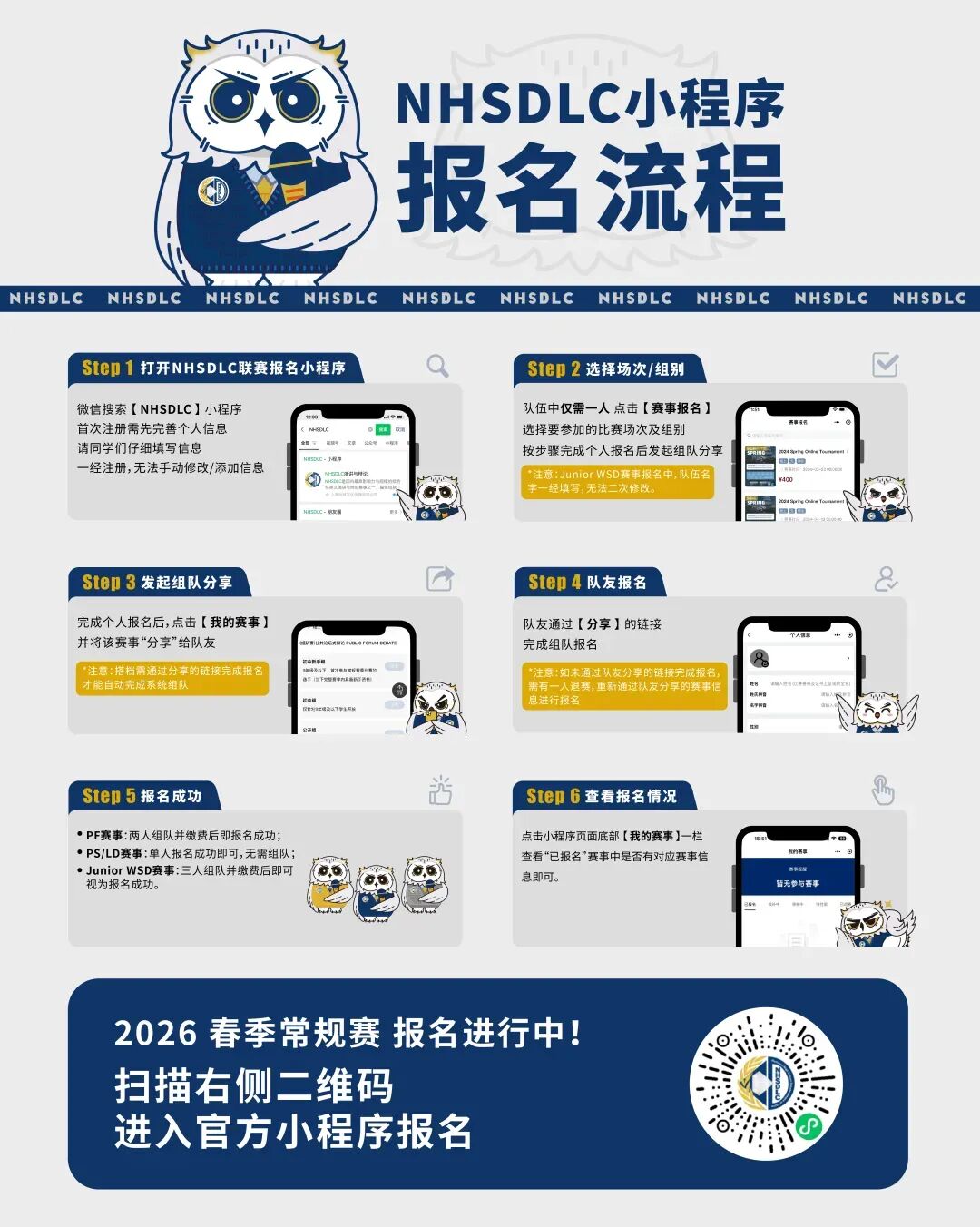
2026 NHSDLC春季常规赛报通道已开启!